
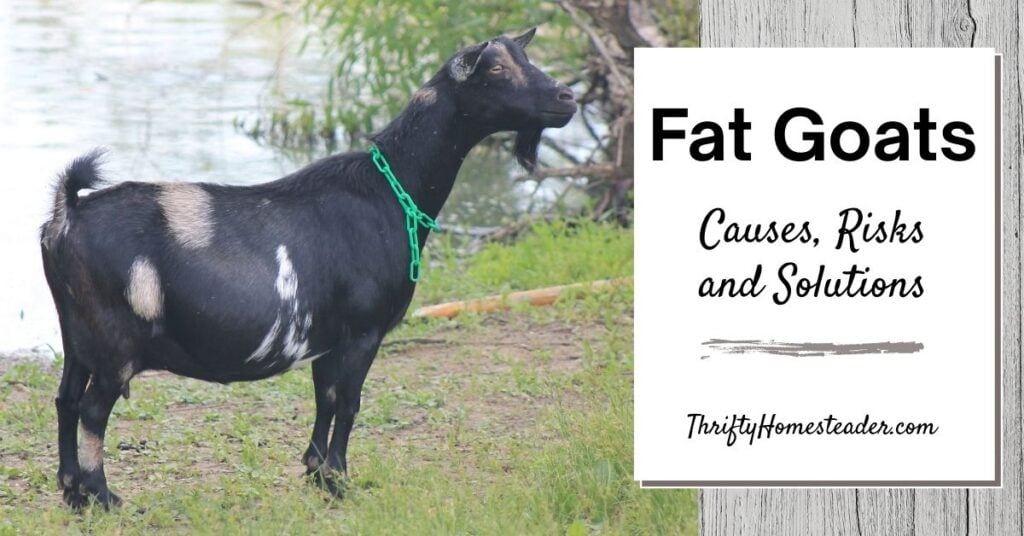
Obesity in goats is far more common than most people realize.
In fact, one of the biggest challenges with overweight goats is that many owners don’t recognize it. A goat with a thick winter coat or a naturally round barrel can look “well fed” or “cute” — but underneath that fluff may be excess body fat that is quietly increasing the risk of serious health problems.
If your goat is healthy, eating forage, and maintaining a steady body condition, you don’t need to obsess over every pound. But when a goat becomes overweight, it’s not just cosmetic. Obesity affects metabolism, reproduction, mobility, and long-term health.
Let’s talk about what obesity in goats really means, why it happens, and how to safely correct it.
What Is Obesity in Goats?
Obesity in goats is defined using the Body Condition Score (BCS) system, which ranges from 1 to 5:
- 1 = Emaciated
- 2 = Thin
- 3 = Ideal
- 4 = Overweight
- 5 = Obese
A goat at a body condition score of 3 is ideal. You should be able to feel the ribs easily with light pressure, but they shouldn’t be visibly protruding. The spine should be smooth but not buried in fat.
By the time a goat reaches a BCS of 4 or 5, there is noticeable fat cover over the ribs and lumbar spine, soft fat deposits around the tail head, and sometimes fat accumulation in the brisket. In bucks and wethers, you may also see a thick neck.
One of the biggest mistakes people make is relying only on visual assessment. Winter coats and certain breeds can make a goat look heavier than it is. That’s why body condition scoring must be done with your hands. You need to palpate over the ribs and spine to know what is actually going on under the hair.
Tired of goat misinformation online?
Get clear, research-based answers and practical guidance inside Goats 365.
Join Goats 365What Causes Fat Goats?
Obesity happens when energy intake consistently exceeds energy expenditure. In other words, the goat is consuming more calories than she needs.
Overfeeding Grain
Grain is the most common cause of overweight goats.
Many goats are fed grain simply because “that’s what goats eat.” But most adult goats — especially dry does, pet wethers, and bucks outside of breeding season — do not need grain at all.
Grain is energy dense. A small amount provides significantly more calories than forage. When fed unnecessarily or in excessive amounts, weight gain is almost inevitable.
High-Calorie Forage
It’s not just grain. Lush pasture and alfalfa hay can also provide more calories than a maintenance animal needs.
This leads to a common question: Is alfalfa bad for overweight goats?
Alfalfa itself isn’t “bad.” It’s a high-quality forage that is excellent for growing kids and lactating does. But it is calorie dense.
If a goat does not have high nutritional demands, unlimited access to rich forage can result in gradual weight gain over time. Many years ago, I sold three does to a 4-Her. The original plan was to breed them, but she was afraid that something bad might happen to them, so they were never bred. However, they were often fed alfalfa hay and struggled with obesity for most of their life because dry does do not need alfalfa.
Limited Exercise
Goats in small dry lots, winter housing, or limited browsing areas often don’t move enough to burn off excess calories. Bucks outside of breeding season and pet wethers are especially prone to low activity levels. I am no longer a fan of city goats like I once was because I’ve seen too many in small backyards that wound up overweight.
Feeding Practices
Free-choice grain, frequent treats, bread, apples, and other “extras” all add up. It’s easy to underestimate how many extra calories are being provided.
Castrated males (wethers) are particularly prone to obesity because their metabolic demands are lower than intact males. Even though wethers are the easiest keepers, I tend to see more nutrition problems with them because their owners overfeed them.
Health Risks of Obesity in Goats
Extra fat is not just stored energy. It affects metabolic function and organ systems throughout the body.
Pregnancy Toxemia and Fatty Liver
Overweight does are at significantly higher risk for pregnancy toxemia during late gestation. When feed intake decreases — even briefly — their bodies mobilize fat rapidly. Excessive fat mobilization can overwhelm the liver, leading to fatty liver syndrome and metabolic crisis.
If obese does have a lot of internal fat, it can further reduce the amount of space in the goat’s stomach in late pregnancy to be able to eat enough food.
Ironically, thin does are also at risk for pregnancy toxemia. The safest place to be is a body condition score of 3.
Reproductive Problems
Excess body fat can interfere with fertility. Overweight does may have reduced fertility and less obvious heat cycles. They may also be at higher risk for dystocia (difficult kidding), especially if fat deposits narrow the pelvic canal.
Hoof and Joint Stress
Carrying excess weight places additional strain on joints and hooves. Over time, this can contribute to lameness and decreased mobility.
Reduced Longevity
Chronic overconditioning can contribute to long-term metabolic stress. Obesity may reduce overall lifespan and resilience to illness.
How to Tell If Your Goat Is Overweight
Signs of obesity include:
- Thick fat covering over ribs
- Spine difficult to feel
- Soft fat at the tail head (tail is triangular because of fat at the base)
- Fat-filled brisket
- Thick neck in bucks and wethers
- Reduced stamina in hot weather
Winter hair coats can hide obesity. That’s why hands-on body condition scoring every month or two is so important.
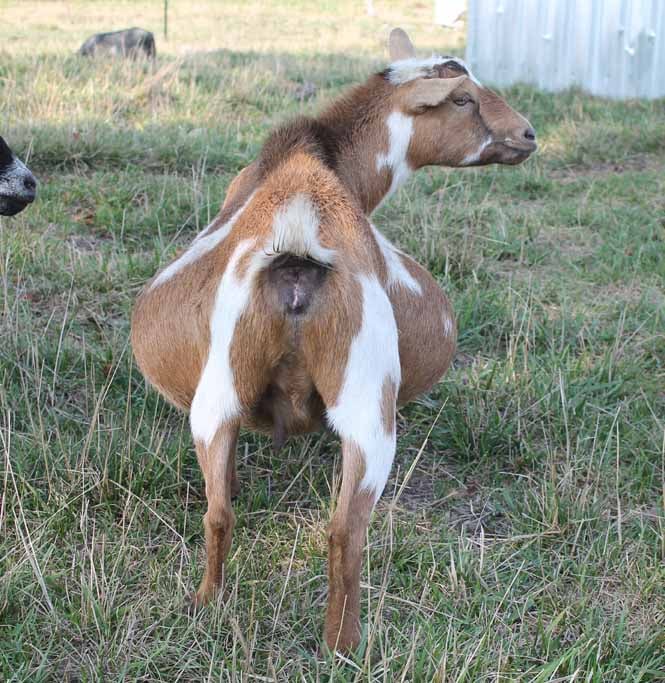
It’s also important not to confuse obesity with other conditions. Late pregnancy, rumen fill, bloat, and even heavy parasite loads can all make the abdomen appear distended. True obesity is determined by fat deposits over skeletal landmarks — not belly shape alone.
The doe below is not fat or pregnant. She simply lost her girlish figure after kidding when she was 4 years old, and she looked like this for the rest of her life. When running my hand down her back, I could easily feel the top of her spine.
How Do I Safely Help an Obese Goat Lose Weight?
This is one of the most common questions I get.
The answer is: slowly and thoughtfully.
Crash dieting a goat can be dangerous. Rapid feed restriction can trigger ketosis or fatty liver, especially in does.
Step 1: Remove Unnecessary Grain
If the goat is not lactating, growing, or in late gestation, start by eliminating grain entirely. Make changes gradually over 1–2 weeks if large amounts were being fed.
Most adult pet goats, both wethers and dry does, do not need grain at all.
Step 2: Evaluate Forage
If high-quality alfalfa is being fed to a maintenance animal, consider transitioning to a good-quality grass hay.
You do not need to starve the goat. Forage should still be available because ruminants need to be nibbling on forage most of the day. The goal is moderate calorie reduction, not deprivation.
Step 3: Increase Movement
Encourage natural exercise:
- Larger paddocks
- Rotational grazing
- Browsing areas
- Strategic feeder placement to encourage movement
Step 4: Monitor Body Condition
Reassess body condition every 4–6 weeks. Healthy weight loss is gradual.
Special Considerations
Pet Wethers
This group has the highest obesity rates. They often receive grain they do not need and may have limited exercise. Many owners overfeed treats out of affection.
Dry Does
Does often gain weight during the dry period. Rations should be adjusted downward when lactation ends, assuming the goat is not pregnant. Goat feed and alfalfa hay should be discontinued until the goat is in the last two months of pregnancy.
Senior Goats
Older goats may have lower metabolic rates and decreased activity. They require careful ration balancing to avoid gradual weight gain.
Preventing Obesity in Goats
Preventing obesity is far easier than reversing it.
- Match feed to production stage.
- Avoid unnecessary grain.
- Body condition score regularly.
- Avoid feeding treats routinely.
The goal is not a skinny goat. The goal is a properly conditioned goat.
A body condition score of 3 supports fertility, metabolic health, and longevity.
Want to feel more confident with your goats?
Learn what actually works (and what doesn’t) inside Goats 365.
Join Goats 365The Bottom Line
Obesity in goats is a management issue. It happens when feed intake does not match actual nutritional demand.
Most overweight goats are not “naturally chunky.” They are simply being overfed relative to their needs.
The good news is that with thoughtful feeding, appropriate forage, and regular body condition scoring, obesity is completely preventable.
If you’re unsure whether your goats are truly at an ideal body condition — or if you want to understand exactly how to balance forage, concentrates, and minerals for every stage of life — that’s exactly what I teach inside my Goat Nutrition course. Because when nutrition is correct, goats tend to be very healthy animals.
Goat Nutrition is one of the 6 in-depth courses included in Goats 365. When you join, you don’t just get information — you also get an ad-free, private community, so you can get your questions answered with no drama. You get structured, science-based guidance on balancing rations, understanding forage, preventing obesity and metabolic problems, and feeding goats correctly at every stage of life. It’s designed to take the guesswork out of goat care so you can make confident decisions instead of wondering if you’re overfeeding, underfeeding, or missing something important.
Pin for later!




Such great information. Thank you.
You’re welcome! We’re glad you found the information helpful. 😊
~ Aimey, THTeam