Episode 175
For the Love of Goats
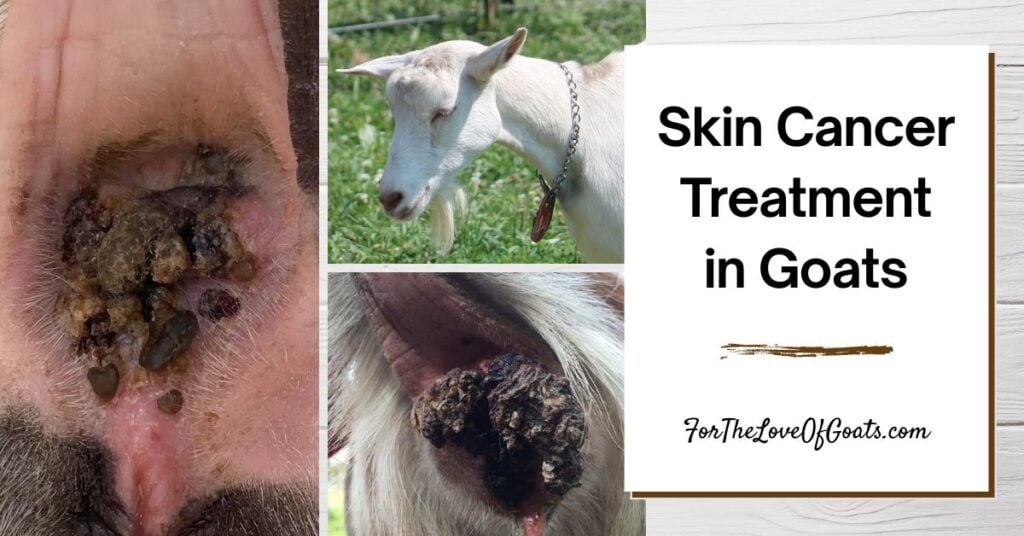
In this episode, Deborah Niemann talks with veterinarian and researcher Jennifer Halleran about squamous cell carcinoma, a type of skin cancer that commonly affects goats—especially Nigerian Dwarfs.
The conversation was inspired by a listener question about whether there are any new treatment options available for goats diagnosed with this aggressive cancer. Dr. Halleran shares insights from a case study that explored the use of a mycobacterial cell wall stimulant (Immunocidin) as a possible treatment. In some animals, the therapy helped shrink tumors and provided several additional years of good quality life.
They discuss how squamous cell carcinoma typically appears in goats, often affecting the perineal area, and why early diagnosis is important. Dr. Halleran explains how veterinarians evaluate these tumors, including when biopsy, surgical removal, cryotherapy (freezing the tumor), or other treatments might be used. The episode also highlights newer experimental approaches such as H-FIRE therapy, which uses electrical pulses to damage cancer cells and may become a promising option in the future.
Deborah also shares her own experience with a goat that developed this disease, illustrating how frustrating and confusing the diagnosis can be for goat owners. Together, they emphasize the importance of early diagnosis, understanding treatment goals, and focusing on improving a goat’s comfort and quality of life.
The episode concludes with practical advice for goat owners, including risk factors such as lack of pigmentation and sun exposure, and why goats with suspicious lesions should be evaluated by a veterinarian as soon as possible.
About the Guest
Listen right here
Don’t miss future episodes of For the Love of Goats!
Subscribe on Apple Podcasts, Spotify, iHeart, or your favorite podcast app.
Watch the video version on YouTube

Tired of goat misinformation online?
Get clear, research-based answers and practical guidance inside Goats 365.
Join Goats 365Transcript
Intro 00:03
For the love of goats, we are talking about everything goat, whether you’re a goat owner, a breeder, or just a fan of these wonderful creatures, we’ve got you covered. And now here’s Deborah Niemann.
Deborah Niemann 00:18
Hello everyone, and welcome to today’s podcast. This podcast episode was inspired, like many of my episodes, by a question from a listener. Someone had a goat diagnosed with squamous cell carcinoma, and she found articles and a podcast that we’d done a few years ago, and she wanted to know if there was anything current that had come up as a treatment option. So I went looking for that in the literature, and I found this amazing study entitled Mycobacterial Cell Wall Stimulant in the Treatment of Squamous Cell Carcinoma: A Case Series Regarding Treatment in Equine, Bovine and Caprine Patients. And I reached out to the author, Dr Jennifer Halleran, Assistant Professor of ruminant medicine at North Carolina State University, asking her if she could talk about the study and her findings. And she said yes, so she is joining us today to talk about that. Welcome to the show today.
Dr. Jennifer Halleran 01:15
Yeah. Thank you very much for having me.
Deborah Niemann 01:17
I am so happy that there’s continuing research being done on this because I had a goat that got squamous cell carcinoma probably 10 years ago now, and my vet didn’t know what it was. I didn’t know what it was. We thought it was some kind of an antibiotic resistant skin infection, and ultimately, we wound up putting her down because it was just too painful for her to poop, like I could be across the barn, and I would hear her grinding her teeth when she would poop, and I was like, I don’t know what else to do. So we put her down. Unfortunately, that is a pretty common story for people. So how did you happen to get interested in this particular topic?
Dr. Jennifer Halleran 01:57
Yeah, so I see a lot of goats here at North Carolina State University, I’m one of the in house clinicians, and we see a lot of companion livestock. And most of those companion livestock are Nigerian dwarf goats, which I think have a predilection to developing squamous cell carcinoma. And really the interest came out of all of the clinical cases that we see and having very similar client stories where there’s not much that we can do, but it’s a beloved pet, and you know, maybe we want to try a different treatment option before euthanasia, and the work that was done in this manuscript actually started during my residency.
So I’m what’s called a board certified large animal internist, and I did a lot of schooling after veterinary school, and did a residency at Oklahoma State University where we saw a mix of production and companion livestock, and the first animal to actually trigger this interest was a bucking bull, not a goat. Squamous cell carcinoma affects all of the veterinary species, but the predilection site is very unique, depending upon what species we’re talking about. So in this bucking bull and in cattle, squamous cell carcinoma is commonly associated with the eye.
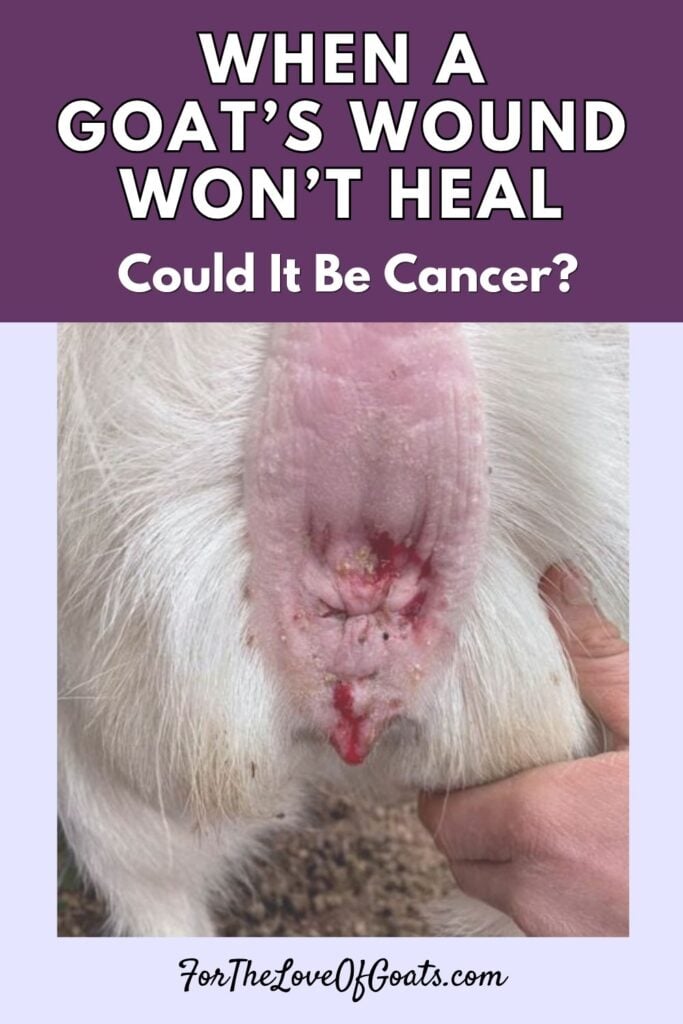
In goats, squamous cell carcinoma is associated with their perineum, or like their little butt region. This bucking bull was a pet, and he had done his career bucking, and now he was a pet for this client. The mass on his face was very aggressive, and the owner did not want to euthanize him. Did not want to cull him. So my mentor during my residency, Dr Robert Streeter, had read about this product used in small animal medicine to treat certain types of cancers, and that product is called a mycobacterial cell wall stimulant. The actual compound’s name is called Immunocidin. And he’s like, let’s try it.
And we got on the phone with a pharmaceutical company in Canada, and they very kindly donated a huge amount of this product so that we could inject it in the lesion of the bucking bull. And he had a full regression of that squamous cell carcinoma for about four years before it there was any regrowth. That was a pretty huge success. So when I moved to North Carolina and started a faculty position here, we would have a group of goats that would come in that would have all these lesions on their bum, and after, you know, diagnosing it with a biopsy come back as squamous cell carcinoma, and we’re left in the same situation.
What do we do? Well. I still have the contact information from the pharmaceutical rep in Canada, and I reached out to them, and they also very kindly donated a whole bunch of that product. So we had a little case series here in NC State, doing intralesional and intravenous injections of that mycobacterial cell wall stimulant into the tumor lesion, and then kind of monitored progression of that lesion over time. And for some goats, they had a huge regression of the cancer of that tumor, it would come back after a few years, but that’s an extra few years of like, quality time that owners can spend with their pets.
Deborah Niemann 05:42
Can you explain to us what is a mycobacterial cell wall stimulant?
Dr. Jennifer Halleran 05:46
Yeah, this product, unfortunately, I’ll just, you know, disclose, I don’t think this product’s available anymore on the market, but it’s different purified components of bacteria that are developed into this product. The product, again, is called Immunocidin, and it’s labeled to treat mammary gland adenocarcinoma in dogs and cats. That’s a type of mammary tumor and also equine sarcoids, which is another type of proliferative epithelial disease. So there’s no label for it used in any food producing animal, and no one’s really sure how it works, how it targets neoplastic or cancerous cells. It’s thought to modulate the immune response.
So there’s a bunch of little immune cells that play a role in, you know, fighting against bacteria and infection and the development of neoplastic or cancer cells. And this product is thought to temper them down, keep them at bay and cause them to go in a quiescent state, so that they don’t proliferate anymore. So that’s what’s thought to happen. I mean, you probably know a lot of goat research, food animal research lags behind quite a bit from our other species. And this is not a product that’s used in human medicine, so there’s not a lot of information available about it.
Deborah Niemann 07:12
So I know in the studies, in some cases, this was the only thing used. In other cases, it was used in addition to surgery, or was it also cryotherapy, too, sometimes. Okay, so how did that play out, like when, obviously, in some cases, surgery is not possible because of the location of the carcinoma. So can you talk a little bit about why one therapy was chosen over another and when you decided to combine them?
Dr. Jennifer Halleran 07:41
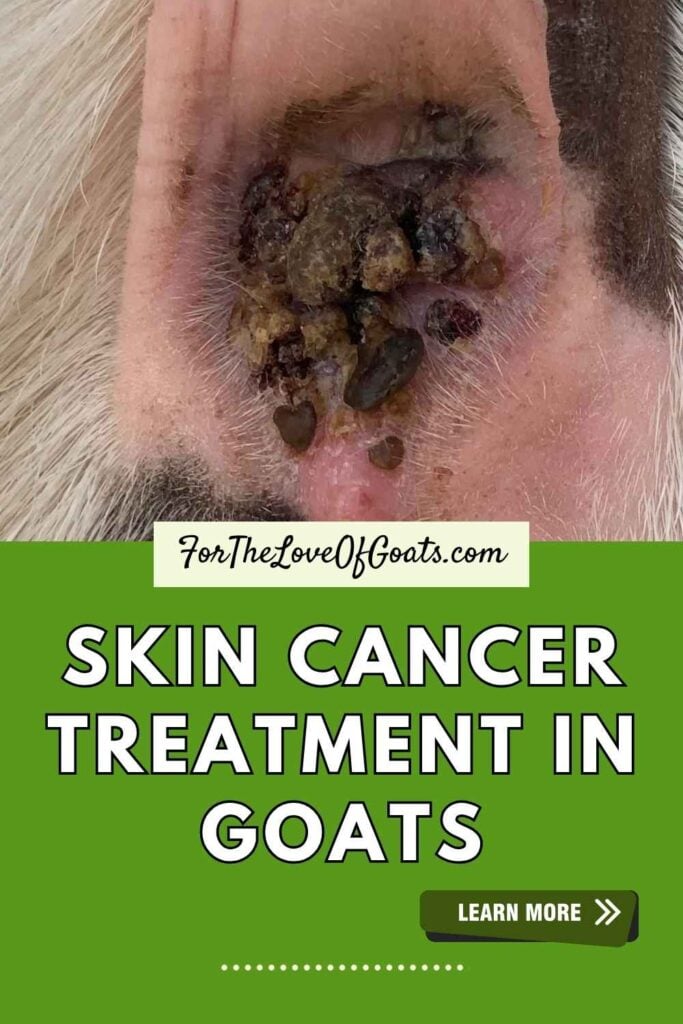
Sure. Maybe an easy way to tackle that is to kind of start at like a presentation of a critter with the squamous cell carcinoma lesion. And we’ll just stick with some goats, yeah? So we have this goat come in that unfortunately has a mass on its booty, and those masses can take on some different appearances. Some of them are going to be very flat and flush with the skin and almost look like a really bad ulcer or a scab. Others are going to have, like a three dimensional effect to them. So kind of initially looking at that mass would already dictate if I’m able to do any sort of surgical debulking, or if I’m going to have to rely on a different type of ancillary therapy.
Now, in the best type of medicine workup, I would love to take a biopsy of that mass. That way I know what type of cancer or growth I’m dealing with, but I understand that logistically, that can be financially very expensive for some clients. So there’s not many other growths that occur on the booty of our small ruminants. So if you see something like that, then squamous cell carcinoma is usually one of my top differentials, depending upon if it’s more flat and like a plaque. That might make me want to lean more towards an intralesional injection with this mycobacterial cell wall stimulant, or potentially chirotherapy, where we freeze the tumor lesion to deaden the cells. If the mass had a three dimensional growth to it – sometimes they look like mushrooms – or we’ll call them like pedunculated, where there’s a stalk. Then we can apply some like local anesthetic around the area, and we can surgically remove that.
The trouble with squamous cell carcinoma is, externally, we can see what the mass looks like, but internally we don’t know how far it’s progressed. So usually in our goat patients, we’ll have to do a digital rectal exam to see if the rectal mucosa or the rectum is abnormal, because just like you shared with your goat, it can be really uncomfortable pooping when they have a mass that’s occluding their anus. So pooping can be difficult, and then for some females, it can invade their vaginal vault.
So doing a speculum exam on them to know how invasive this tumor is can be very valuable and help understand what treatment option is going to be the most appropriate. I’d say, for most squamous cell carcinomas, it’s a combination of debulking or surgical debridement. And when Immunocidin was available, we could use that as an intra-lesional therapy. You could do cryotherapy. I don’t think this was mentioned in the manuscript, but I cannot remember. There’s a new clinician here who’s working on an alternative therapy for squamous cell carcinoma called H-FIRE, which I’m happy to talk about too, but that could be another ancillary therapy for those lesions.
Deborah Niemann 10:43
Okay, yeah, go ahead and talk about that other one.
Dr. Jennifer Halleran 10:46
So it’s called H-FIRE. The gentleman here who studies that, I don’t know if he’s a physicist or an electrical engineer. His name is Dr Mike Sano, and he is really interested in looking at how electricity can affect and degrade neoplastic or cancer cells. So he’s done a case in horses that have different types of cancer, either squamous cell carcinoma or melanomas, and depending upon the size of the lesion, he’ll take electric probes and put them on either side and then kind of do an electric pulse therapy to change the electrochemistry of the cells in that region, to kind of kill off the cancer cells and then see if there’s any regression of that tumor. We’ve done it in I think at least one goat that had squamous cell carcinoma and it worked for a pretty long period of time. So that could be an exciting upcoming new type of therapy for not only squamous cell carcinoma, but maybe for some other cancer types, for different species.
Deborah Niemann 11:59
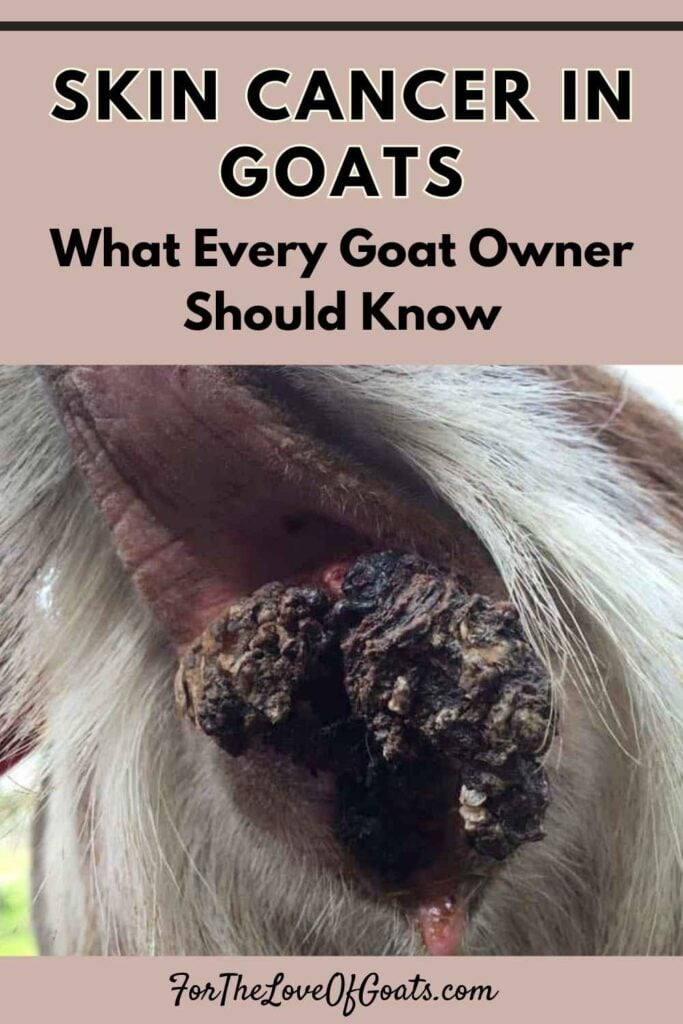
That is interesting, and it’s good to know that there’s other stuff that’s happening in this realm. One of the things that was really sad when I first heard about this, I think it was nine or 10 years ago at a conference, and this was after my goat had it, and the presenter is a vet, and this picture pops up on the screen, and then she says, you know, says what it is. And I was like, ‘Oh my gosh, that’s Lizzie’. I immediately took a picture of the slide, and I sent it to my husband. I said, “Does this remind you of anything?” And he says “Lizzy”, because it was just the most horrible looking thing. It was very much 3d like and my first thought when I saw it was goats don’t get hemorrhoids, like, what is that like? It’s this huge mass that’s, you know, protruding, and it looked very scabby initially, and then the vet told me to clean it up. It just looked super bloody and horrible.
And at that conference, the vet doing the presentation – and it was a room full of probably 90% vets and a few of us who raised goats – she asked if anyone there had successfully treated it, and at that time, everybody was shaking their head no, and said that, you know, trying surgery, it would grow back within months. Trying to freeze it, it would grow back in months because it was so aggressive internally. I’m glad to hear you talk about diagnostics that can be done to see how far it’s progressed internally, because I think that could really help a lot of people, like this person that just contacted me.
She said that her vet didn’t want to do surgery, but she wanted to freeze it, and she thought she would need to do it several times, and she said she thought it was too deep to do surgery, which didn’t really make sense to me, because if it’s too deep for surgery, how is freezing? Because freezing, I’ve personally had, you know, growths frozen, it doesn’t go very deep. So that didn’t make a lot of sense to me. But I think people are usually very attached to their goats, and this was true with this particular goat too, you know. And I think her vet was probably just offering her the only thing that she knew was available.
Dr. Jennifer Halleran 14:09
And sometimes, like freezing or debulking, that at least provides relief for that external lesion, because, like you remember, with your goat, it’s uncomfortable, and if it’s like, very three dimensional, it could get very contaminated with their environment, or more abrasion if they rub up and itch their butt on something, because it’s very itchy; it’s very uncomfortable.
Deborah Niemann 14:34
Yeah, I know I was very worried about it and that’s why I thought it’s some kind of an antibiotic resistant infection and once I cleaned it up, now we’ve got this open bloody wound that poop is like, just falling. It’s like, coming out, and it’s just like, oh my gosh, if it wasn’t infected before, how can it not get infected when there’s poop coming out over it all the time.
Goat care doesn’t have to feel overwhelming.
Join Goats 365 for courses, community, and expert guidance to help you raise healthier goats with confidence.
Join Goats 365Dr. Jennifer Halleran 15:01
We had another bucking cow. It doesn’t have a predilection in bucking animals. But we had another bucking cow here that these owners found and presented for a non healing wound on her perineal region, on her booty, and we thought it also was a like antimicrobial resistant infection and a lot of wound care, debriding dressing changes to that area. And I think maybe about a weekend we did a biopsy, and it came back as a squamous cell carcinoma. They have many different ways they can present, many different ways they look, and they are very frustrating to treat.
These are wonderful new therapies. The H-FIRE sounds so promising and fantastic. Immunocidin was really lovely too, but I agree with that veterinarian, unfortunately, like it can come back. But you know, cancer therapy is very different in animals compared to humans. It’s focused on buying quality time and relief of any suffering. For a lot of our species, it tends to not be curative because we just don’t have information about that or resources to study it.
Deborah Niemann 16:13
That’s right, yeah, but it’s really promising that they lived an extra three or four years as opposed to everybody in that room, you know, nine or 10 years ago were saying, “Oh, it’s back in a few months”.
Dr. Jennifer Halleran 16:28
That first bucking bull, and then the other goat that I grew very attached to during this study, the bucking bull’s was regressed for years, and that other goat at least a year. She passed away for a completely unrelated reason to the squamous cell carcinoma, she ate a toxic plant.
Deborah Niemann 16:47
So, oh, that’s unfortunate.
Dr. Jennifer Halleran 16:50
I know they’re just too curious for their own good.
Deborah Niemann 16:55
Yeah, oh, my goodness. So this particular study looked at seven animals. Two were goats, and then you also had some cows and horses and, unfortunately, this drug is not available. So what do you think we learned from this that we can apply going forward?
Dr. Jennifer Halleran 17:15
That’s a really good question. I think I’ve learned a few different things from the study. It was one of my very first times using a therapy that’s not routinely thought of for veterinary medicine; it was kind of extrapolated. So I think there’s definitely an interest to do that for future research endeavors. I think that it allowed me to think of different alternative strategies to treat squamous cell carcinoma. I did learn too that it is a pretty aggressive tumor. But like you said, buying time, quality time for a lot of our companion livestock is very valuable for owners. I do think, not so much writing this paper, but the act of doing the whole trial, especially here at NC State, stimulated a lot of critical thinking for what we could do next. And that’s when we roped in Dr Sano for the H-FIRE. So I think it allowed for a lot of propulsion, like moving forward in terms of different treatments.
Deborah Niemann 18:22
So at the moment, the treatment option for most people in most areas is still just going to be surgery or freezing and hoping for the best. Or if they’re close to North Carolina State, they could come see you, and your colleague has got this other novel treatment that he’s working on. Do you know of any other places, any other universities in the US that are working on this?
Dr. Jennifer Halleran 18:48
That’s a great question. I am not aware of any other universities looking at different therapies for squamous cell carcinoma or using H-FIRE. You probably get this podcast a lot, but squamous cell carcinoma typically affects cattle and usually in their ocular, their eye region, which is problematic in terms of slaughtering those animals. So any research that’s done for squamous cell carcinoma is typically done in cattle because of the huge economic association with it, and not so much in like the companion small ruminant industry. To that point, I’m not aware of any new research that’s happening in cattle that we could extrapolate from cattle into small ruminants.
I think a lot of people try to mitigate squamous cell carcinoma. There might be a genetic component to it. There’s one farm I work with where a mother goat and then her offspring all developed lesions on their perineum. So that’s not been demonstrated yet. But if you have a goat that is of breeding value and develops squamous cell carcinoma, maybe consider not breeding that animal. Having shade is another huge preventative measure in both cattle and small ruminants for squamous cell carcinoma, because non-pigmented skin tends to be at highest risk for the development of this type of cancer. So if they have a barn, they can go chilling.
Deborah Niemann 20:16
Yeah, and I would imagine, like in a place like Oklahoma, there’s a lot of big ranges that don’t have any trees and stuff. So a lot of the cattle are going to be out there in the sun all day.
Dr. Jennifer Halleran 20:31
In cows, it’s normally associated with a certain type of breed called the Herford cow. They’re the big, red and white ones. They’re so cute, but they have, like, all white around their eyes. So that’s why they’re predisposed to it. And a lot of the Nigerian dwarfs that we see all have white booties, so like their non pigmented. And Nigerian dwarfs are so speckled back there. So if there’s not a lot of pigment, then they would be a type of goat that could be at a higher risk for developing it.
Deborah Niemann 20:59
Yeah, my goat that got it was pure white. She looked like a little Saanen.
Dr. Jennifer Halleran 21:05
Yeah, the one that we did, the H-FIRE on, was all white too.
Deborah Niemann 21:08
And she has a daughter. Her daughter is now 12 or 13 years old, and she’s still good. She’s pure white. She has a pure white daughter. That pure white daughter is still good. I’m going to be a little sad when she dies, because I think white goats are so beautiful, and she’s my last. I’ve had a white goat since the beginning, but this last one never had any white babies.
Dr. Jennifer Halleran
Oh, really.
Deborah Niemann
Yeah. So she’s going to be the end of the line for my white goats.
Dr. Jennifer Halleran 21:38
How many goats do you have?
Deborah Niemann 21:40
About 20 does and too many bucks.
Dr. Jennifer Halleran 21:44
Are they all Nigerian dwarfs?
Deborah Niemann 21:45
Yes, they are now.
Dr. Jennifer Halleran 21:47
Yeah, they’re my favorite.
Deborah Niemann 21:49
Well, is there anything else that you can think of that people need to know about squamous cell carcinoma?
Dr. Jennifer Halleran 21:57
I guess I would just advise owners if, like, they had a goat that had a lesion on their bum, it’s probably better to have it checked earlier rather than later. That way, if there was any chance of a nice surgical debridement or freezing, it may not have progressed internally as severely as some of them do. You know, your veterinarian might ask to perform a biopsy of that to confirm it’s squamous cell carcinoma and not just a wound or some other type of skin lesion that’s present, but I think that would kind of be like the sequence of it.
Deborah Niemann 22:29
Well, thank you so much for joining us today and talking about this. Hopefully the therapy that your colleague is working on is going to continue to prove to be helpful, and maybe some other people listening to this will say, “Hey, I should research that too”.
Dr. Jennifer Halleran 22:47
That’d be great. I’d be happy, happy to help do that.
Deborah Niemann 22:50
So if people want to contact you to talk about this and their particular goat, how can they reach you?
Dr. Jennifer Halleran 22:57
Yeah, the best way is probably my email address. So it’s Jennifer Halleran. Well, my name is Jennifer Halleran, and if you Google me at NC State, and I’ll pop up along with my contact information, my email address is jlhaller@ncsu.edu.
Deborah Niemann 23:20
Well, thank you so much for being here today.
Dr. Jennifer Halleran
Yeah, thank you for having me.
Deborah Niemann
And that’s it for today’s show. If you haven’t already done so, be sure to hit the subscribe button so that you don’t miss any episodes. To see show notes, you can always visit fortheloveofgoats.com and you can follow us on Facebook at facebook.com/lovegoatspodcast. See you again next time, bye for now you.
Pin for later!