Episode 176
For the Love of Goats
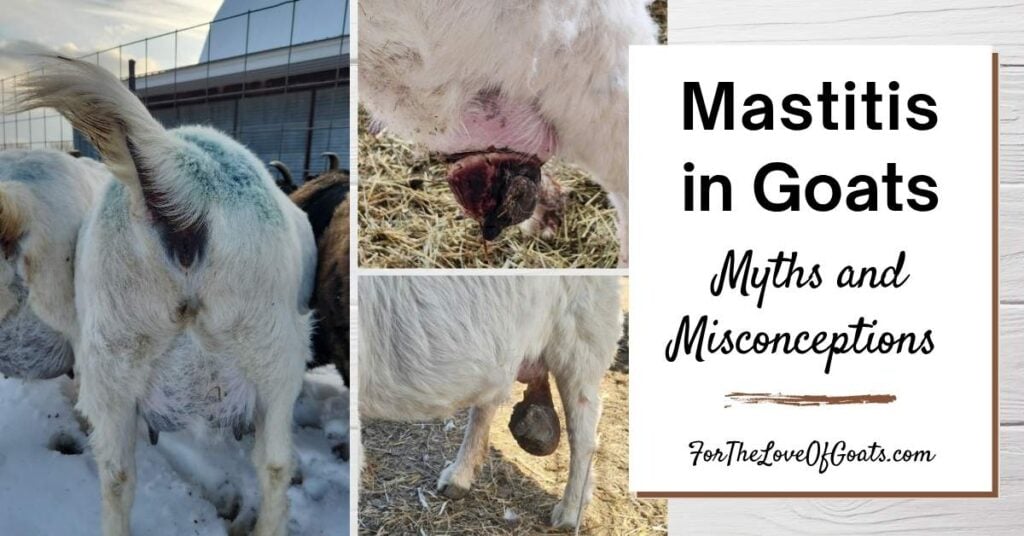
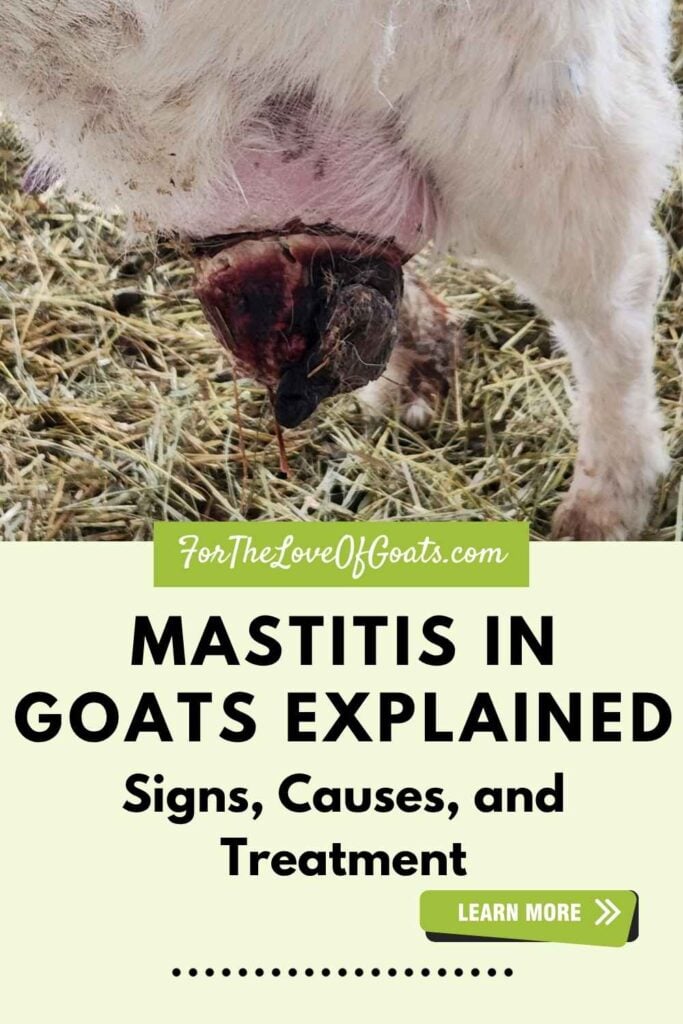
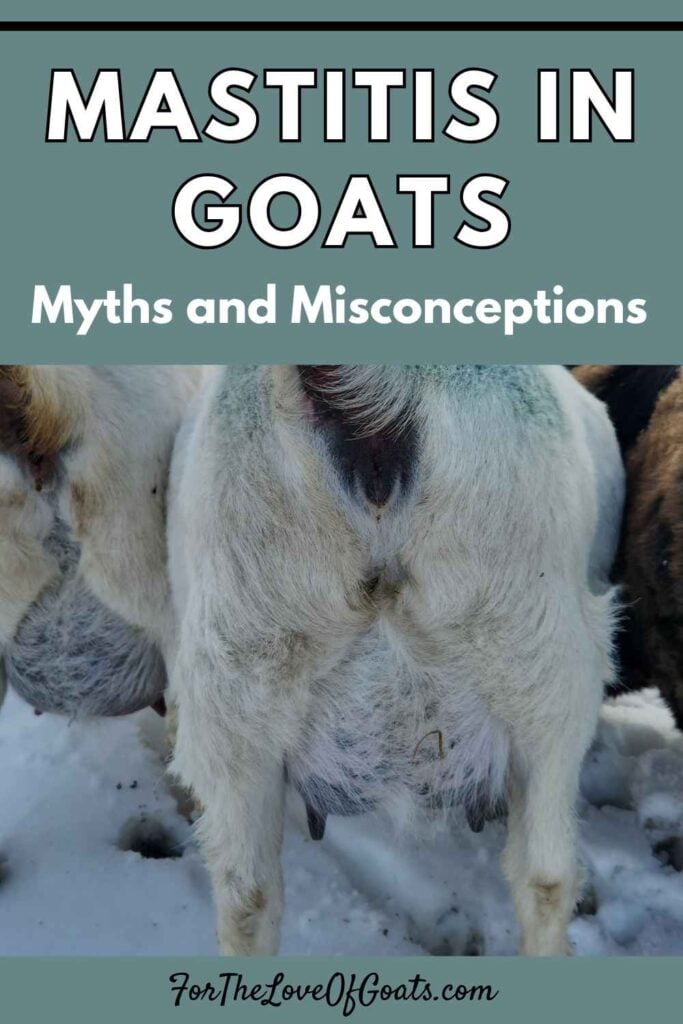
It’s probably safe to say that most goat owners think they understand mastitis, but it’s often more complicated than it seems. While many people associate it with a hot, hard udder, that’s only one form of the disease, and it’s not even the most common type seen in goats.
In today’s episode, Deborah Niemann talks with Dr. Michelle Buckley of Cornell University and Dr. Patrick Gorden of Iowa State University about what mastitis really looks like and why it’s so often misunderstood. They explain the difference between clinical and subclinical mastitis, and how infections can be present without obvious symptoms while still affecting milk production and udder health.
They also discuss why it’s important to identify the specific cause of mastitis through a milk culture before choosing a treatment. Some infections may clear up on their own, while others, like Staph aureus, can become chronic and very difficult to manage. Understanding the difference can make a big impact on your goat’s long-term health.
Dr. Buckley and Dr. Gorden also share practical advice on preventing and managing mastitis, including proper milking hygiene, how infections spread, and when treatment is necessary. This episode will help you avoid common mistakes and make more informed decisions when mastitis shows up in your herd.
Tired of goat misinformation online?
Get clear, research-based answers and practical guidance inside Goats 365.
Join Goats 365Featured Guests
- Michelle Buckley, DVM, MS, PhD – Director and Assistant Professor of Practice at Cornell University’s Quality Milk Production Services.
- Patrick J. Gorden, DVM, PhD – Professor and Director of Food Supply Veterinary Medicine at Iowa State University.
Resources & Links
- Quality Milk Production Services (College of Veterinary Medicine, Cornell University)
- Mastitis Therapy in Small Ruminants (study abstract)
- How to Collect an Aseptic Milk Sample (Step-by-step guide with photos)
- Dairy Goat Video Modules
- Sustainable Dairy Goat Agri-Systems
Listen right here
Don’t miss future episodes of For the Love of Goats!
Subscribe on Apple Podcasts, Spotify, iHeart, or your favorite podcast app.
Watch the video version on YouTube

Transcript
Transcript
Intro 0:03
For the love of goats! We are talking about everything goat, whether you’re a goat owner, a breeder, or just a fan of these wonderful creatures. We’ve got you covered. And now here’s Deborah Niemann.
Deborah Niemann 0:18
Hello everyone, and welcome to today’s episode. I think this is a very needed episode that I’ve been wanting to do for a really long time, because it is about something that everybody thinks they understand, and pretty much everybody gets it wrong, and that is mastitis.
Deborah Niemann 0:34
We are joined today by Dr. Michelle Buckley, who is an assistant professor of practice and director of the Quality Milk Production Services at Western Laboratory in Warsaw, New York, which is part of the Cornell University Animal Diagnostic Lab. And Dr. Patrick Gorden, who is a professor at Iowa State University College of Veterinary Medicine. Welcome to the show today!
Dr. Michelle Buckley and Dr. Patrick Gorden 0:56
Thank you.
Deborah Niemann 0:56
I am so excited to have you here. I was thrilled when I discovered that Dr. Buckley had authored four studies on mastitis, which is more than I’ve seen on anybody else’s resume. So I feel like if it’s mastitis, she knows it in and out. So let’s get started. So that just begs the question, what got you so interested in mastitis that you wound up doing not just one, but four studies that I’m aware of.
Dr. Michelle Buckley 1:23
So yeah, we did quite a bit of work on specifically dairy goat mastitis during my time as a postdoc at Iowa State. But I will actually have to defer to Pat to answer this question, because that whole grant was written and funded before they hired me. I was really excited about working with dairy goats and the producers, but as far as the impetus for that project, I think Pat could probably speak to that more.
Dr. Patrick Gorden 1:46
Yeah, so this work is part of a USDA funded grant. And so the USDA is interested in funding grant work in all animal species, and there’s less competition, I guess maybe in the dairy goat side. And so we got an opportunity to put a grant in to look at subclinical mastitis in dairy goats from all directions. The kicker was that it had to have some degree of education and outreach toward antimicrobial resistance prevention. And so we wrote it to use a lot of antibiotics at dry-off in these animals and demonstrate that it wasn’t going to create resistance in these treated animals. So that was actually back before COVID. That’s how old. That long ago this was, and Dr Buckley was recruited and started in what 2021 something like that.
Dr. Michelle Buckley 2:35
Which was five years ago. That’s crazy.
Dr. Patrick Gorden 2:37
Yeah.
Deborah Niemann 2:37
And you’ve done a fabulous amount of work in that time. So what I said at the beginning that everybody thinks they know all about mastitis, but they don’t. There are a ton of misconceptions about mastitis, and the thing that I come across the most is that everybody thinks that mastitis means a hot, hard udder. And as long as their goat’s udder is not hot and hard, they don’t have mastitis. Talk about why that’s wrong, and then what are some of the other misconceptions, where everybody thinks they totally understand mastitis, but they don’t.
Dr. Michelle Buckley 3:07
Yeah, I think the best place to start when you’re talking about mastitis is that there’s different kinds of mastitis. So there’s clinical mastitis, where you have the cardinal signs of inflammation, redness, swelling, dysfunction, where you have abnormal milk, pain, things like that.
Dr. Michelle Buckley 3:25
And then you can have subclinical mastitis, where bacteria can actually live in the udder and not cause those clinical signs, but they can be creating subclinical problems. And so eventually, over time, those bacteria can stay in the udder and kind of chip away at the productive mammary tissue and turn it into non productive scar tissue, which can impact production, volume, and it can also affect components and things like that.
Dr. Michelle Buckley 3:53
So you can have mastitis that doesn’t actually look like mastitis, but it can be a problem in your goats. And so I think you’re spot on when you say, people get it wrong, or they only have half the picture of when they think about mastitis.
Dr. Patrick Gorden 4:06
Yeah, I would say as a proportion of the total mastitis, subclinical mastitis is far more common in goats than it is in cattle, where we think about 25% of all mastitis losses are associated with clinical mastitis. And clinical mastitis is not all that common in goats, comparatively. So, a much larger proportion of the losses associated with having intramammary infection is due to subclinical in goats, in my opinion.
Deborah Niemann 4:30
Like a lot of people, I learned about mastitis the hard way. It was all the way back in 2012. We were on milk test at the time, and I had a goat who had clinical mastitis at one month fresh, full blown. I treated her with antibiotics. It seemed to go away, and then a month later, it was back again. And that time, I foolishly thought, “Okay, I’m not going to be treating her with antibiotics every month”, not realizing this was a problem.
Deborah Niemann 4:56
And so I thought, people say that essential oils on the udder work, so I’m going to do that. So I did essential oils on her udder, and that appeared to work. So I thought it was fine, even though, month after month and she seemed fine, she had no more symptoms of mastitis, but her somatic cell count was coming back very high. It was like I used Dairy One in New York, which I’m sure you’re familiar with, Doctor Buckley, because it’s right there. And so they have a scoring system, and she had the highest score on the SCC. And I was just saying, “Oh, well, it’s a goat. Goats have higher SCCs than cows.” So that’s another big misconception. Can you talk about that a little bit?
Dr. Michelle Buckley 5:34
As far as the somatic cell comparison between cows and goats, we can start there. That’s a little bit easier one to address. Goats and cattle and sheep produce milk differently from a physiologic perspective. So cows and sheep do what’s called merocrine secretion, or that’s the majority of how they produce milk. So they will make the components of milk inside a cell, and then they will send those components out through the cell membrane and into the duct system that eventually brings it all together into the gland system.
Dr. Michelle Buckley 6:05
Goats do it a little differently. If you know anything about goats, you know they’re different, right? And I say that with love. And so they do what’s called apocrine secretion, where they make all those components inside the cell, and then part of that cell membrane actually becomes a package around the components, and it packs them up into a little vesicle, and then those vesicles get sent out into the duct system and so on and so forth.
Dr. Michelle Buckley 6:30
The reason that that matters is because when you send goat milk through an automated somatic cell counting machine, a lot of times, those machines can’t necessarily tell the difference between those vesicles full of milk components and somatic cells. And I think the equipment is getting better, and I don’t deal with those types of machines on a regular basis, so I shouldn’t be, you know, considered an expert here, but I do know that the gist of it is that a lot of the automated cell counters will count some of those vesicles as somatic cells erroneously. So yes, goats do tend to read a little bit high on somatic cell counting machines. However, it’s not as big of an impact as I think most people think.
Dr. Michelle Buckley 7:13
And there was a paper published about that a while ago, which I don’t have pulled up here, but they actually compared the different types of somatic cell identification versus, like, just straight up looking at the milk on a glass slide, so you can truly differentiate. And there’s actually not as big of a discrepancy there as you would expect. So that indicates that milk quality in general, in the dairy goat population is probably still below what we want it to be, and certainly in comparison to like the cattle industry.
Dr. Michelle Buckley 7:42
So the other point that you brought up was recurrent mastitis, which Staph aureus is kind of the one that I think of, and Pat might be able to speak to this a little bit as far as how Staph aureus works in the udder, and why we see the pattern that you described with that bug in particular.
Dr. Patrick Gorden 8:00
When you get Staph aureus, I mean, it presents a couple of different ways, one being the chronic mastitis, like you were talking about earlier, where it has the ability to wall itself off inside of a mammary gland, which makes it almost impossible to treat even with antibiotics. We just can’t get enough antibiotic at the level of the infection to be effective. And so if that animal, whether it be a goat or a cow has had the ability to create scar tissue around that infection, then I don’t think you’re going to have much luck with treating; but there are situations where we have relatively short duration infections, where I’ve been able to successfully treat cattle, at least with antibiotics, and clear the infection at a pretty high level in those animals.
Dr. Patrick Gorden 8:37
And the other form that we would see is maybe gangrene mastitis, where we have a really severe clinical case of mastitis, in this case, where the bag initially is going to be inflamed and eventually become cold and blue and be detrimental to the long term productivity and even the survival of that animal, which is a common presentation of staph aureus. It occasionally happens in Staph aureus infections.
Deborah Niemann 9:03
And you can ultimately have a goat, like the infected half can just turn black and literally fall off all by itself within a day or two.
Dr. Patrick Gorden 9:11
That’s what will happen with gangrene.
Dr. Michelle Buckley 9:13
Another aspect that I have seen in Staph aureus mastitis is it can be subclinical as well. So these animals can look completely normal even though they have the infection. And these are your problem children. They’re your typhoid Mary’s, because they will have this infection in their udder, and for whatever reason, they don’t necessarily develop a clinical response, or they may develop clinical mastitis and then resolve either because you know you treated them or didn’t. It’s going to resolve either way, and then she can shed that bacteria subclinically, so she’s not showing clinical signs.
Dr. Michelle Buckley 9:47
Usually, these animals will spike a high somatic cell, though not always. These are animals that are going to be sneakily spreading this disease throughout your herd, because you are probably lulled into a false sense of security, thinking the mastitis went away, you might lower your biosecurity practices and your milking hygiene practices, but at any given time, that goat could be shedding Staph aureus into her milk, and then by that milk coming in contact with other goats udders, either through milking or equipment or nursing kids, then other goats can be exposed and as a contagious pathogen, it can obviously be problematic.
Deborah Niemann 10:25
Yeah, absolutely. So looking back on it now, knowing all the things I know now, I realized there were so many mistakes that I made there, and one of them, I think, is probably a mistake that 99% of goat owners do, and that is, you know, when she first got the hot, hard, udder I immediately treated her with Today, which at that time was over the counter. It’s not anymore. You’d have to call your vet, but that was not the right thing to do. Can you tell us why? What should I have done instead?
Dr. Patrick Gorden 10:53
Ideally, I’d culture it first to know exactly what you were dealing with, right? That would give you the idea of that you’re dealing with something that you could treat here, maybe, if it’s not too chronic. As far as the choice of antibiotic, I mean, we’ve used Today in Staph aureus, at least cows, right? And have been successful with the efficacy of the product, it should work, but I’d prefer to have a culture result first.
Dr. Michelle Buckley 11:14
Right. Because there are only very specific situations when you would expect that product to work, right? If it’s a new infection, and it’s really hard to tell if it’s a new infection or if it’s been there a while and just hanging out. I can say, from like what all I do all day every day, is deal with milk cultures in this job. And one mistake that I see a lot of people make is they’ll let an animal get mastitis a few times before they take a culture, or they’ll wait three or four days to see if the mastitis clears up on its own before they take a culture.
Dr. Michelle Buckley 11:48
The reason you don’t want to wait for multiple episodes of mastitis is because, to Pat’s original point, you’re not going to cure Staph aureus mastitis if you deal with it after it’s chronic. That is the definition of a chronic infection — multiple episodes over a prolonged period of time. So you want to get on it early. And then, as far as waiting to collect the sample, you don’t have to submit a sample just because you’ve collected it.
Dr. Michelle Buckley 12:11
So if you aren’t in a position where you want to send a sample into your lab the day that the goat starts making weird milk, collect the sample, but then put it in the freezer so you can initiate treatment. You can wait to see if she clears up on her own, but you have that original sample, because that is the most likely one to be diagnostic. After a few days, her immune system’s kicked in, and you might just waste your money because she’s kicked the bacteria on her own. And then you’ll get frustrated, because, well, why do I bother culturing these? I just get a negative result. And yeah, you were too late to the party.
Deborah Niemann 12:45
So if somebody wants to collect a culture and stick it in the freezer for possibly sending it in to find out what the pathogen is, what kind of technique should they use in terms of, like, cleaning the teats and udder and what kind of collection container should they use for best results.
Dr. Patrick Gorden 13:02
Actually, collecting aseptic samples in goats is a lot easier than in cattle, but the technique is the same. I prefer to do it around milking time. So they’re already prepping the teat with their typical pre- dips, wiping that dry, making sure the teat end is clean, and then taking an alcohol soaked cotton ball or a two by two swab that’s alcohol soaked, making sure that the alcohol is not excessive. So squeezing the cotton ball to get as much of the alcohol out as possible, and just wiping across that end to give one more level of cleaning to try to make sure that that teat is clean.
Dr. Patrick Gorden 13:35
And then they need to use a sterile vial. Those could be vials that your milk hauler would use if you ship milk commercially, or you can get them through a veterinary clinic, or any veterinary supply place should have them also. Take the sample, being careful not to contaminate the vial while collecting the milk. So if you’re stripping the teat, hold the vial off to the side at maybe a 45 degree angle, and shoot the milk into the vial. And then while you’re doing that, making sure that the top of the vial is not being contaminated by your fingers, or you laid it on a surface that’s dirty, recap it, make sure that the tube is identified with the animal and the half that you cultured, and then get it in the freezer as soon as you can. Even at refrigeration temperatures, the population of bacteria will change over time if it, especially if it’s contaminated. But freezing, pretty much, they can be frozen for a long period of time and not be too detrimental to the outcome.
Deborah Niemann 14:25
So there could be somebody listening right now who says, “Oh, I don’t have one of those sterile containers, and I don’t have time to try and find one. Could I just use a Ziploc bag, like that’s new? Is that sterile? Or is there something else I could use that’s around the house?”
Dr. Michelle Buckley 14:39
Wouldn’t I just…
Dr. Patrick Gorden 14:41
It might work.
Dr. Michelle Buckley 14:41
sterile, otherwise you’re wasting your money.
Dr. Patrick Gorden 14:43
Yeah.
Dr. Michelle Buckley 14:43
Because it could be contaminated with bacteria, like soap and water doesn’t cut it for cleaning these things. It’s a very slippery slope. If you were going to try and sterilize it by dumping in bleach or dumping in alcohol to a container like then you could be killing off any bacteria that come in with the milk. So I would say it’s better to just wait a day until you can get to your vet’s office. Or you could even probably order these on Amazon and have them sent to your house in 24 to 48 hours, and collect a sample that way. Rather than do it wrong and waste your money if you have dairy animals, ask your vet to give you vials to keep on hand before it’s a problem.
Deborah Niemann 15:23
That’s a good idea. Yeah, like, I would say every single person who has goats, even if they’re meat goats, they should have a CMT on their farm, because, you know, your goat’s not going to tell you, I’m planning to have a hot, hard udder next week. You know, you never expect it. So it’s good to have it on hand because any animal with a working mammary system could get mastitis regardless of what their purpose on the farm is.
Dr. Michelle Buckley 15:46
Especially on the part of their body that tends to lay directly on the ground.
Deborah Niemann 15:50
Yeah, exactly. In fact, one of my courses online, the picture I have of a gangrenous udder that, like, is hanging by a thread, it’s in the middle of falling off, is actually from a Boer goat. So, you know, this happens across the board. I think one of the biggest misconceptions that people have is that mastitis is mastitis is mastitis, and that’s actually, there’s a huge variety of mastitis, and we’ve touched on that a little bit.
Deborah Niemann 16:15
So Staph aureus is absolutely one of the worst because it tends to be antibiotic resistant. It’s very hard to permanently cure it, because you hear about it coming back over and over again, and I know people with dairies tend to cull very hard for this, because it can be transmitted through the milking equipment. So like, you just milked this goat with mastitis, so the next one’s going to be contaminated. When you put those inflations on her, she could wind up with mastitis. So if you hear about Staph aureus, you think, oh my gosh, mastitis is the worst thing in the world. But not every mastitis is Staph aureus. So can you talk a little bit about the different pathogens that cause mastitis?
Dr. Michelle Buckley 16:55
Yeah, in goats, Staph aureus definitely is the big bad wolf, kind of, right? Like no one wants to hear that on their farm. In the work that I did, we were looking at subclinical mastitis. So we were culturing clinically healthy goats and looking to see if they had an infection before they were dried off. And the vast majority of those infections, like over 40% of clinically normal goats, had an infection at dry off, and the vast majority of the bugs that we found were non-aureus staphs.
Dr. Michelle Buckley 17:25
Those are much less concerning, I think, as far as we know today, as far as the literature goes, because we can pretty effectively cure them with the intra-mammary antibiotics that are available. In the project that we did where we were looking at the efficacy of intra-mammary antibiotics during the dry period, over 50% of animals that we didn’t treat cured the infection on their own or didn’t have a bug in their udder when we cultured it. After they came fresh, that number shot up to above 80% for both of the antibiotics that we worked with. So we definitely do see pretty good efficacy of treating these infections, at least in the short term, with antibiotics. They could certainly come back or be reinfected. But we did see a difference between using antibiotics and not treating them.
Dr. Patrick Gorden 18:11
Yeah, I think that kind of leads to that last part that she said, that the mastitis and infection, an animal could be reinfected. And I think that’s part of the misnomer of people when they start doing therapy, but they don’t necessarily culture to the degree that we did in this research, where we have a sample before the animal is treated, and then a sample immediately after the animal getsback in into the herd, where we could demonstrate that we had a different infection present.
Dr. Patrick Gorden 18:38
And so if you just culture before and culture after or just look at somatic cell count, you might interpret that the animal didn’t get it, but the new infection rate of these animals was pretty high also, so not surprising to us. The antibiotics that we use are while they’re “dry-off” antibiotics, and remember, it considers them to be long duration. The duration is still not very long, maybe days that it’s effective, and so that last portion of the dry period when the animal is coming back into lactation is of high risk period also. In the dairy cow world, we try to use things like teat sealants or both internal and external, or increased dipping prior to calving. And so that’s still a portion of that needs to be addressed in the overall milk quality improvement arena.
Dr. Michelle Buckley 19:20
To get back to your original question: other bugs that can cause mastitis. Goats can get pretty much any pathogen that cattle can get, but it’s a lot less common. We see a lot more of the staphs in goats, but strep species can also be a problem in goats. We can see E. coli. We can see Klebsiella, which are more environmental- type bugs, those would be gram negatives. They tend to make the animals a lot more systemically ill as well, and that also tends to be more related to, like, an individual farm type scenario, where there’s specific risk factors there that make them more susceptible to those things. Maybe there’s a higher exposure or something like that.
Dr. Michelle Buckley 19:59
I’ve also gotten a fair number of questions about Pseudomonas in goat milk culture. Specifically, my question when I get asked that is always, “Is the goat actively dying, or is she already dead?” Because by the time you have taken a milk culture and gotten a result back in 24 to 48 hours, if that result is pseudomonas, if the animal is truly infected with pseudomonas, they are very, very ill or already dead. I mean, this is a really, really nasty bug. Thankfully, it is not very common that it actually infects goat udders, in my experience. And so when people look at me and say, No, she’s fine, her milk was just a little off for a few days. I say you probably had some contamination happen during the udder prep process or the sample collection process. Pseudomonas tends to live in wet, damp places like hoses.
Dr. Michelle Buckley 20:54
So when we talk through these scenarios, what usually comes up is, oh, I hosed off her udder before I took the sample, because I wanted her to be extra clean, and then that water probably dripped into the collection vial as they were collecting the sample. So that’s a little note about pseudomonas, because I get questions about it fairly often.
Dr. Michelle Buckley 21:13
Another thing to highlight is that not just bacteria can cause mastitis in goats. So CAE, or caprine arthritis encephalitis virus, can also cause a mastitis-like syndrome. but it’s more of a hard bag type syndrome, where the udder just gets really, really hard and it’s not productive. You can’t get milk out of it. That’s a virus. We can’t cure it. It can also be passed on to kids through nursing and other bodily fluids. So if you have that type of mastitis on your farm, especially if you have goats or kids with, like, joint ill or respiratory infections or things like that, if you’re getting back cultures that don’t make sense to you, then you probably need to be thinking about viral causes as well.
Dr. Michelle Buckley 21:56
Mycoplasma is a bacteria type organism that can also cause a hard bag mastitis, and it will also cause disease in goat kids. The tricky thing with those two bugs is mycoplasma, we can do milk cultures to find it, but it’s a special type of culture. You need to request that testing separately, and it’s an additional cost for any lab, so it’s not going to be included with a normal milk culture for the viral cause. That is not something we detect in milk, so that testing needs to be done through your vet. It’s usually a blood test, and that’s a completely different workup. So they’re atypical, but certainly can happen.
Want to feel more confident with your goats?
Learn what actually works (and what doesn’t) inside Goats 365.
Join Goats 365Deborah Niemann 22:34
Yeah, and if you weren’t convinced before that you need a culture now, hopefully you are, because it’s not black and white. It’s not like, Oh, she has mastitis, and so this one medication is going to cure her regardless. Speaking of curing goats, the most intriguing thing that I learned from your research was the number of goats who just cure the mastitis on their own. That explained so much because I’ve had people tell me all kinds of crazy things. Like, I’m not even going to give the examples. I use peanut butter now as my placebo for everything, like, oh, I gave my goat peanut butter and her mastitis got better, so peanut butter cured it. So this just explained everything. I’m like, oh, that’s why that weird thing somebody thought that weird thing cured their goat’s mastitis. So can you talk about how many goats are just able to cure it on their own?
Dr. Michelle Buckley 23:25
Well, from the research that we did, that was a really specific project, right? We were only looking at non-aureus staphs, which are very susceptible to antibiotics, and the immune system probably also can take care of them pretty well. So in that study, over 50%, I think like 54% cured their infections with no treatment during the dry period. These were animals that were not showing clinical signs of mastitis at any point during the 30 days leading up to dry off or during the dry period, and they only had one type of bug.
Dr. Michelle Buckley 23:56
So yes, we did see some self cures. Goats do have immune systems that are supposed to be able to take care of these types of infections, but like we talked about with staph aureus, once the goat has that, unless you’re able to catch it really early, that animal is probably going to have that bug for life. And so if we ran the same study looking at goats with staph aureus, you would see a very different outcome as far as cure rates go. Again, a nuanced answer where some bugs, yeah, they’ll cure on their own, and some will not.
Deborah Niemann 24:20
Was there anything else from your research that challenged conventional wisdom or misconceptions?
Dr. Patrick Gorden 24:38
Well, I think, you know, big picture. If you look at degree of antimicrobial resistance that developed in these animals, it was almost non-existent. So if you look outside the mastitis world, you know, the people tend to be pretty harsh on the use of antibiotics. In this case, we treated 100% of the animals in the treatment groups and saw no increase in antimicrobial resistance. So everybody’s always concerned when we go ahead and use this degree of antibiotics in the cow world. We still use blanket dry cow therapy pretty aggressively in the cow world, and also in our research.
Dr. Patrick Gorden 25:10
You know, the development of antimicrobial resistance in mastitis pathogens is not all that strong in the US anyway, and so I think that there’s a real opportunity to make some progress on milk quality without creating a large degree of antimicrobial resistance. And then, I think the other thing that we need to be very clear about is that we used full tubes of product in each half of the animal. And everybody’s always worried about, you know, are we going to have long withdrawal times when we used one of the two products we were able to, for both meat and milk have very short withdrawal periods, so we wouldn’t have to have a long period of milk discard, or if they decided to market this animal after the treatment, a long period to wait to do that with our tomorrow product.
Dr. Patrick Gorden 25:53
We did see pretty long on the slaughter withdrawal side, on the cloxacillin product that we used, which, in looking at the literature, probably wasn’t tremendously surprising. I think when we’re asked, well, could we use half tubes? Could we use quarter tubes? Could we do something different? I would highly say, recommend, not doing that, because you don’t know exactly what you’re dosing when you start trying to split a tube out. Use the full tube and just rely on the information that your veterinarian provides for a withdrawal time there, and they can reach out to a group called FARAD that’s available through the funding from the US government down at NC State, to get some guidance on withdrawal times. But they’re really very short. Surprisingly, considering the amount of drug we put in these animals.
Dr. Michelle Buckley 26:36
The other aspect of splitting tubes and reusing tubes is you are introducing something into the udder. And you certainly run the risk of, if you treat one goat with half a tube that has an infection, and then you go to treat another goat, especially at dry off, when you’re blanket treating everyone, and maybe you’re treating a goat that doesn’t have an infection, and you don’t have any way to tell the difference, then you could be introducing an infection at that point. So yes, you’re giving antibiotics at the same time, but that’s still a risk.
Dr. Michelle Buckley 27:09
Also, sanitation, just in general, during dry off and treatment is really important, even though you’re putting antibiotics in the udder it’s not an excuse to be dirty. That’s not going to cover up if you are not really super duper clean with the way you’re preparing the teats and then infusing the tube, infusing the medication. You can absolutely kill animals by using dirty, like if you drop the tube on the floor after you take the cap off, she you know, the goat kicks when you go to infuse it, and suddenly that goes flying. Certainly happened to me a time or two, and that is a recipe for disaster. So making sure that we’re not reusing tubes, not splitting tubes, and throwing out anything that falls on the floor and gets dirty and contaminated is really important.
Deborah Niemann 27:54
Just to be clear, for people who have, like, pygmies or Nigerians or whatever. So even for these little goats, you’re still saying that they should still use a full tube?
Dr. Patrick Gorden 28:04
Yes.
Dr. Michelle Buckley 28:05
Another point about that is that with these drugs, we did a lot of work, like Pat said, as far as drug residues. So looking at how much of it stays around in the udder until she starts milking again, looking at how much stays in her body, in the tissue, and gets from the udder into the rest of her body. We looked at levels in the blood immediately after and for a week after, and there’s very little of this drug that gets into systemic circulation. Obviously, we still want to be really cautious with processing animals during those withdrawal periods, because it’s not nothing, but it’s a very small amount, and it’s not an amount that I would expect to impact the health of an animal, even a small animal.
Deborah Niemann 28:47
Yeah, so let’s talk a little bit about the difference between local versus systemic infection. You touched on that a little bit with the one of the pathogens where you said you ask, is the animal dead? Because it becomes a systemic infection fairly quickly, and Staph aureus is another one of those that can get systemic and kill a goat. So is it too simple to say that if the goat just has local symptoms, that it just needs to be treated with an intramammary infusion, and if the goat is like laying in the corner of the barn and has a fever of 106 it needs an injectable antibiotic.
Dr. Patrick Gorden 29:23
Yeah, I think that’s true. You know, the reason that the class of antibiotics is in mastitis tubes is because they don’t cross the barrier between the bloodstream and the milk very well. If you would use those exact same formulations as an injectable which there’s mostly none of those are available as injectables. But like penicillin as an example, there’s a penicillin tube and a penicillin product, you will not achieve a very high concentration in the mammary gland of penicillin by injecting it systemically. So that’s one of the things.
Dr. Patrick Gorden 29:52
Generally, when the animals are sick, it isn’t necessarily because the bacteria is circulating in the blood from the mammary gland. It’s because the bacteria is producing toxins. Those toxins are absorbed into the bloodstream, and that’s what’s making your animal sick. We may still use a systemic antibiotic in those times, but we also need a lot of other things, like anti- inflammatories and fluids to help try to clear that toxin out of the system and counteract the effects of the toxin to make the animal feel better. When your animal is super sick, systemic antibiotics by themselves probably aren’t enough to really get it to come around.
Dr. Michelle Buckley 30:23
Yeah, that’s a really interesting phenomenon, actually, that a lot of producers are intrigued by, is that NSAIDs like Banamine and Meloxicam are really, really useful for binding a lot of those toxins and neutralizing them, and also severe mastitis, real painful. We definitely want to make sure that we’re addressing that, so the benefit of those medications is definitely twofold and should not be underestimated.
Dr. Michelle Buckley 30:49
Also, a lot of times, vets will give, like, IV fluids for these animals, like Pat said, to try and flush the toxins out as well. But don’t underestimate the value. Everyone just wants to go for antibiotics right away, and there’s certainly a place for that, but your NSAIDs are probably actually going to do more in that scenario than the antibiotics.
Deborah Niemann 31:07
That’s awesome that you mentioned, other treatments in addition to just treating the mastitis itself. Is there anything else in terms of supportive care or treatments that you should do for a goat that has mastitis?
Dr. Michelle Buckley 31:19
Milking them out as frequently as possible, definitely helpful for you know, dilution is the solution to pollution, so just trying to get that bacteria out as often as possible and flush the mammary gland is really helpful for mild to moderate mastitis. Yeah, I would like to your original point. I think localized treatment, if it’s indicated by your culture result, is the way to go, but always milking them out as often as possible is going to be beneficial for that too.
Deborah Niemann 31:45
So if you’ve used an intramammary infusion, how long do you need to wait before you milk them out?
Dr. Patrick Gorden 31:50
Well, I mean, they’re labeled to be used at either two or three times per day if you are stripping them out more often than that, the effectiveness of those antibiotics for the entire duration of if you’re doing it, like once a day, as an example, is not going to be there beyond the three strippings per day.
Dr. Michelle Buckley 32:08
This kind of brings up another topic that I talk about a lot with the dairymen that I work with, dairy men and women. Abnormal milk does not mean active infection. What I mean by that is, after you’ve treated the animal, a lot of folks will use, you know, medications that have a variable length of use. You could treat for three days, you could treat for eight days, and it’s kind of a you decide type deal, and vets can give recommendations on that as well, but a lot of folks want to treat for the full eight days, because even after three days of treatment, the milk isn’t back to normal yet.
Dr. Michelle Buckley 32:40
And what I tell people is that the immune system is the reason the milk is abnormal. It’s not the bacteria. The antibiotic has probably done what it’s going to do in the period that is on the label. What we really need to be aware of is that it’s going to take more time for the milk to go back to normal after you’ve treated them, because the immune system is going to be working for a few more days yet.
Deborah Niemann 33:03
So if you’ve treated, you’ve done the treatment according to the label, and the udder doesn’t feel abnormal anymore, and the production seems normal. Is it safe to assume that the infection is probably successfully treated?
Dr. Michelle Buckley 33:16
The udder might not even feel normal yet, either, because that’s part of the immune response as well. You could take a follow-up milk culture. Yes, you’ve been treating them with antibiotics, but if the antibiotics have not effectively cured the infection, then there’s still going to be bacteria in that milk. So I think that’s probably the best way if you’re really, really worried about it. But if it’s a mild to moderate mastitis, where you’re only seeing changes in the milk or changes in the mammary gland, I would say, use the lower duration of treatment, and then give her a few days and see if she can sort herself out.
Dr. Patrick Gorden 33:46
Yeah, the duration of time that you should wait after you do that treatment, though, there’s a lot of debate about that. You know, the effects of the antibiotics are going to hang around for a few days, even at low concentrations. And so if you try to collect a sample, let’s say four or five days after the treatment’s complete, you got to be a little bit careful on reculturing those treated animals, because if you do it too soon, the effects of the antibiotics may still be present in the milk and they may inhibit growth on an agar plate in the lab. So generally, I recommend that we don’t reculture cows. and go to be the same scenario for at least 14 to 30 days after a treatment to establish whether or not they’ve cured the infection or not.
Deborah Niemann 34:26
Let’s talk just for a minute about goats that have just freshened because the CMT is no good. You can’t use a CMT on colostrum. And so if somebody has a goat that freshens with an udder that feels hard, what should they do, just in terms of anything?
Dr. Patrick Gorden 34:43
So who would disagree that the CMT may not be valuable there? Its most prognostic is no response, right? So if you get zero response, that would say that there’s no inflammation there. It’s just associated with parturition, udder edema, as an example. The colostrum is going to make it look thick, but it can still work.
Dr. Michelle Buckley 35:02
To your point. I mean, yes, it’s going to be thick, but what you’re really looking for is how it’s loopy, right? Thickness is okay, but if it’s congealing together, that’s really what you care about on the CMT, as far as how to deal with an animal with a hard udder at freshening. Like Pat said, that can be normal edema in the udder in the immediate post fresh period is very common. So my first thing would be to say, like, don’t panic. If she’s otherwise healthy, you know, seeming bright and alert, eating, drinking normally, letting kids nurse, kids are looking full, then let’s just take a deep breath and give her 24 to 48 hours and see what happens.
Dr. Michelle Buckley 35:38
Culturing colostrum is tricky, just because of the consistency of it, we certainly can do it, but this may be normal, and that can persist for a few days after freshening, or even a week or more. It’s never wrong to take a sample and keep it in the freezer or submit it just to be safe, but hard udder in the fresh does is potentially very normal. Might not be a sign of mastitis.
Deborah Niemann 36:02
That was a great answer, because a lot of people just automatically, you know, start to worry about it being mastitis, even though it can be completely normal. The only time I ever actually had that happen to one of my goats, she turned out to be the best milker that I’ve ever had in 24 years. She was a first freshener, and I guess her udder was just kind of like, Whoa. What’s happening?
Dr. Michelle Buckley 36:20
Yeah, exactly. They got a lot going on.
Deborah Niemann 36:23
Yeah. So kind of to sum up, basically, if your goat has a positive CMT, don’t just automatically treat without doing a culture first. Or if you don’t want to do a culture first, to see if maybe she’s going to clear it, at least, get the milk sample. Stick it in your freezer, so that if, within three or four days, it’s not back to normal, you would send that in to get it tested to see what pathogen you’re dealing with and what antibiotics would work on that.
Dr. Michelle Buckley 36:54
Oh, another thing I think is important to note is 30% of the cultures that we get from animals with clinical mastitis are going to come up with no growth or nothing significant. So it is possible that you could take a sample and do all the things right, like I told you in the beginning, as far as, like, timing and everything, it could be negative. And that can happen for a couple of reasons. But I don’t want people to get discouraged if they start collecting cultures and they’re getting some negative results and some positive and, you know, some actual identifications. There’s a lot of reasons that can happen. You can, you know, talk to your vet or your lab about the specifics of that and how to minimize the risks of getting something that’s not actionable, but it is normal, and so that’s okay if that happens.
Deborah Niemann 37:37
Which reminds me, what do you think of those tests now that people can purchase, and you have to have an incubator to make this work. But I do know people like, if they have a lot of goats, or they have an on-farm dairy or something, they have an incubator. So they purchase these plates to see what kind of an infection they have. What do you think of those? Should people get those? Or no?
Dr. Michelle Buckley 37:56
I have a lot of farms here that I work with that do on-farm culture, and then we’re actively working to support those farms right now and developing resources for them. It can be done. It’s not a way to save money. It’s certainly not a way to save time. You have to be meticulous, very clean, you have to be really knowledgeable, and it’s best if you continue doing quality assurance work to make sure that you’re not drifting in your protocols. So there’s a place for it, but that place is not saving time or money by any means.
Dr. Patrick Gorden 38:26
Yeah, I think on the goat side, it might be a little less cost effective, because we often use it as a mechanism to direct treatment right on animals that should receive treatment or not receive treatment. And given there’s so little clinical mastitis, on the goat side, I’m not sure that wanted to do some selective therapy. Maybe that would be an approach, but I’m not certain long term if that would be a good solution, either. But like Michelle said, we do that commonly on dairy farms. It takes a lot of support, a lot of QA to make it work well.
Dr. Patrick Gorden 38:54
As we talked about, there’s a lot of research that Michelle did in the time that she was here at Iowa State. Our extension group was very involved in her project, also in working with Michelle on creating a lot of materials that are available for dairy goat producers, and that is on a website called The Dairy Goat Extension and Education that has now been housed at a another website called The Sustainable Dairy Goat Agri Systems website, which is part of a multi state project that we’re involved with here at Iowa State, along with the University of Tennessee, University of Arkansas and UC Davis, looking at dairy goat sustainability from an economic standpoint.
Dr. Patrick Gorden 39:30
And there’s also an animal health component that our group is working on in mastitis, but also some respiratory disease in goat kids. And so I would direct anybody who has looking for more information about dairy goats in general, more information about the work that Michelle did while she was here at Iowa State, to go to The Sustainable Dairy Goat Agri System site, and you can find the link for the extension site at the right hand corner of that, so lots of information there. Continue to come back, because it’ll continue to grow as we get our research completed and published.
Deborah Niemann 39:59
That is great. Thank you so much. Dr Buckley, do you have any final thoughts?
Dr. Michelle Buckley 40:03
My lab can certainly accept goat cultures. We can take cultures from all over the country and the world. So if you have questions or want to submit, you can give us a call at 877-645-5525, and we can work with you on that. But yeah, there’s a lot to be learned, and Pat’s group’s doing a really great job of getting through a lot of that research, so I’m excited to see what they come up with, as far as mastitis goes, and a lot of other diseases too. But appreciate you allowing us to come on and share some of what we’ve done already.
Deborah Niemann 40:36
Yeah, thank you so much for joining us. I could have asked you questions for another hour, I got through like half of my questions, but this has been fantastic, and I think this is going to be so helpful for people. So thank you very much for joining us today.
Dr. Michelle Buckley 40:50
Absolutely my pleasure. Have a great day. Deborah,
Deborah Niemann 40:53
Thank you.
Deborah Niemann 40:54
And that’s it for today’s show. If you haven’t already done so, be sure to hit the subscribe button so that you don’t miss any episodes. To see show notes, you can always visit fortheloveofgoats.com and you can follow us on Facebook at facebook.com/lovegoatspodcast. See you again next time. Bye for now.
Goat care doesn’t have to feel overwhelming.
Join Goats 365 for courses, community, and expert guidance to help you raise healthier goats with confidence.
Join Goats 365Pin for later!