If you’ve ever reached into a nest box and found an oddly shaped egg or cracked one open to discover a surprise, you’re not alone. Whether you’re new to backyard chickens or have had hens for years, weird eggs are bound to appear now and then.
From double yolks to shell-less wonders, these curiosities can be alarming at first, but most are harmless and often tied to perfectly normal changes in a hen’s cycle. In this article, we’ll explore the most common types of weird eggs, what causes them, and whether they’re safe to eat.
Double Yolks: A Sign of Youth or Genetics

One of the most delightful egg oddities is the double-yolked egg. These usually occur in young hens whose reproductive systems are just getting the hang of things. Occasionally, two yolks are released from the ovary at the same time and encased in a single shell.
Double-yolkers are common in large-breed hens like Buff Orpingtons, and some hens are genetically predisposed to lay them more often. While it might look like a sign of a super-productive chicken, double yolks are not usually a long-term trait—most hens outgrow this phase after a few months.
Are double yolks safe to eat?
Absolutely. In fact, many people consider them a lucky find!
Fairy Eggs: The Tiny “Oops” Eggs

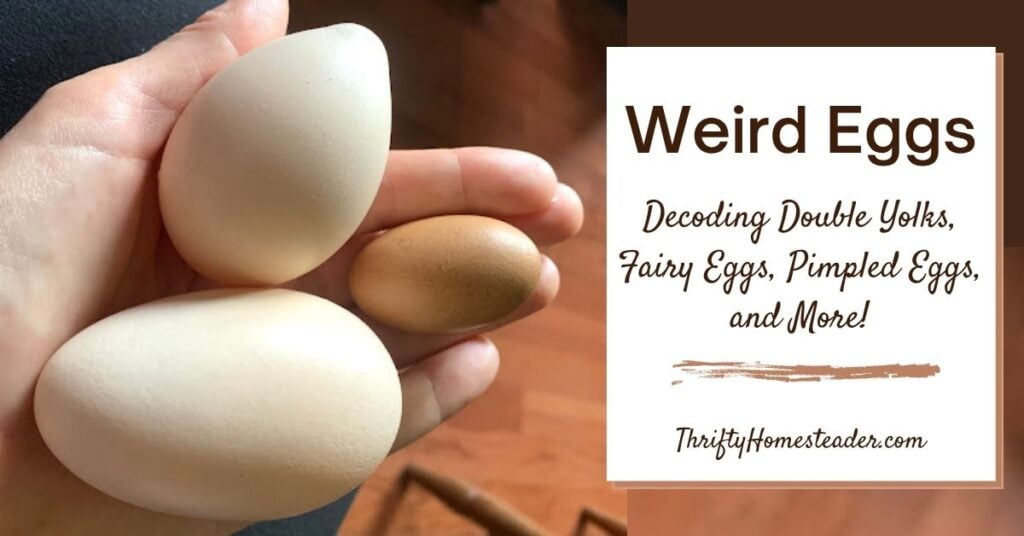
Sometimes called “wind eggs,” “witch eggs,” or “fart eggs” (yes, really), fairy eggs are those teeny, yolk-less eggs that look like they came from a pigeon instead of a chicken. These usually happen when a piece of tissue or tiny bit of yolk accidentally triggers the egg-laying process, resulting in a shell being formed around almost nothing.
Fairy eggs are most common in pullets just starting to lay or occasionally in older hens whose systems have a hiccup.
Are fairy eggs edible?
They’re safe, but since they’re usually just whites and air, they’re more of a novelty than a meal.
Pimpled Eggs: Calcium Bumps and Rough Textures

If you’ve cracked an egg and found small bumps, sandpaper-like patches, or gritty ridges on the shell, you’ve encountered a pimpled egg. These are typically caused by calcium deposits that accumulate when the shell gland doesn’t form the outer layer smoothly. It can happen if the egg spends too long in the shell gland or if the hen has an inconsistent calcium intake.
Older hens are more prone to this, as are those with disrupted laying schedules due to stress, heat, or illness.
Are pimpled eggs safe?
Yes, as long as the shell is intact. Just rinse before using to avoid getting any of that rough surface in your food.
Shell-less Eggs: Soft and Wobbly

Finding a rubbery, shell-less egg in the coop can be a little alarming, but it’s more common than you might think. These eggs still have a membrane but no hard shell, sometimes due to calcium deficiency, stress, or an immature shell gland in young hens.
Stressors like heat waves, predator scares, or nutritional imbalances can all contribute. If your hens are regularly laying shell-less eggs, it’s time to evaluate their diet—particularly calcium intake—and environment. But if you just get one now and then, there’s no need to worry. We might see one of these every year or so in our flock of around 80 hens.
Can you eat shell-less eggs?
Technically, yes—but only if they’re collected right away and the membrane hasn’t ruptured. Because they’re more vulnerable to bacteria, many people choose to discard them.

Odd Shapes and Wrinkles: When Form Doesn’t Follow Function
Misshapen eggs—pointy, lopsided, or wrinkled—can appear when something interrupts the normal egg-forming process. This might be due to stress, age, disease, or trauma to the reproductive tract. A hen who had infectious bronchitis, for example, might lay wrinkled eggs permanently due to scarring in the shell gland.
Occasional oddly shaped eggs are nothing to worry about. But if you’re seeing them frequently, or if the hen seems unwell, it’s worth investigating further.

Are misshapen eggs edible?
Yes, as long as the shell is intact and the egg is fresh.
Blood Spots and Meat Spots: Unsightly But Harmless
Crack open an egg and see a red or brown speck? That’s most likely a blood spot (from a broken blood vessel during ovulation) or a meat spot (a bit of tissue from the oviduct). While they can be off-putting, they’re not a sign of disease or fertilization.
These are more common in older hens or those under stress, but they don’t affect the egg’s safety.
Should you eat them?
You can — just remove the spot with a spoon if it bothers you.
Speckled or Discolored Shells: More Than Just Looks

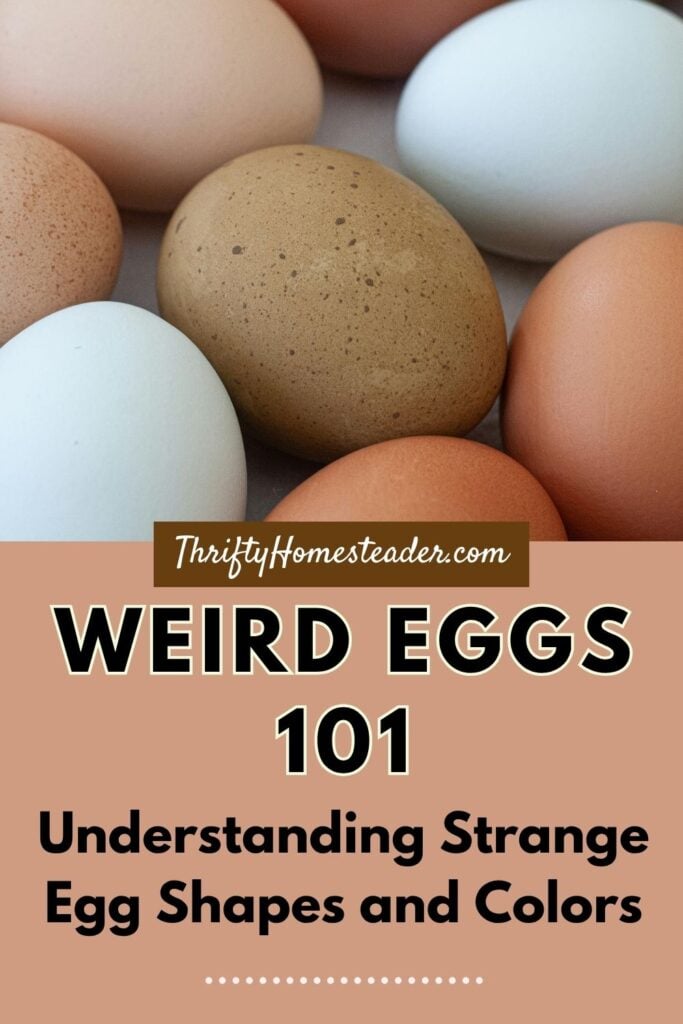
Speckles on eggs can be genetic or due to pigment deposits from the hen’s diet. Brown egg layers in particular often lay speckled or blotchy eggs, and some breeds are more prone to it than others.
Color variations can also be influenced by stress or disturbances during pigment deposition. As long as the shell is smooth and solid, these are purely cosmetic differences.
Are speckled eggs safe?
Yes! In fact, many people find them especially beautiful.

When to Worry About Weird Eggs
While most egg anomalies are harmless and temporary, there are a few signs that could indicate a bigger problem:
- Sudden change in egg quality across multiple hens could mean disease or a nutritional issue.
- Persistent shell problems in a single hen might point to reproductive tract issues or age-related decline.
- Foul odor, leaky shells, or mold are signs to discard the egg immediately.
If you’re ever in doubt, the float test can help determine if an egg is still fresh. Just place it in a bowl of water—if it sinks and lies flat, it’s fresh. If it floats, toss it.
Want to learn more about how long eggs stay fresh in the fridge and other signs of spoilage? Read this full guide on how long eggs last.
Weird eggs are part of the charm (and sometimes the mystery) of keeping your own hens. Most of the time, these oddities are just part of the natural ebb and flow of your flock’s reproductive rhythm. So the next time you crack open a double yolk or find a tiny fairy egg in the nest box, just smile and enjoy the wonder of your quirky backyard birds.
Click here to visit our Amazon store, which includes lists of things chickens need, as well as our favorite chicken books! (As an Amazon Associate, I earn from qualifying purchases.)
Pin for later!