If you’ve ever collected fresh eggs from your backyard hens or bought farm-fresh eggs at the local market, you may have wondered: How long do fresh eggs last in the fridge? And should they be washed or not?
There’s a lot of conflicting advice online, and unfortunately, not all of it is grounded in science. So let’s take a look at what research says about how long eggs stay fresh, the safest way to store them, and why refrigeration matters.
How Long Do Eggs Last in the Refrigerator?
We’ve been licensed egg producers in Illinois for about a decade now, and after candling, we can stamp a “sell by” date on the carton that is 45 days from today. That does not mean the eggs are bad after that date. It simply means they are probably no longer Grade A, meaning that there is now a sizable air pocket on one end of the egg because as an egg ages, water evaporates through the shell, which is porous.
The sell-by date in Illinois used to be set 30 days after packing but it increased a few years ago. If stored properly, eggs are typically still safe to eat for at least 2 to 3 weeks after that date, but the yolk will be more watery and flat.
Signs Your Eggs Are Still Good
To check whether your eggs are still fresh:
- Smell test: A rotten egg smells unmistakably bad, even before cracking it. If it smells off, it’s best to toss it.
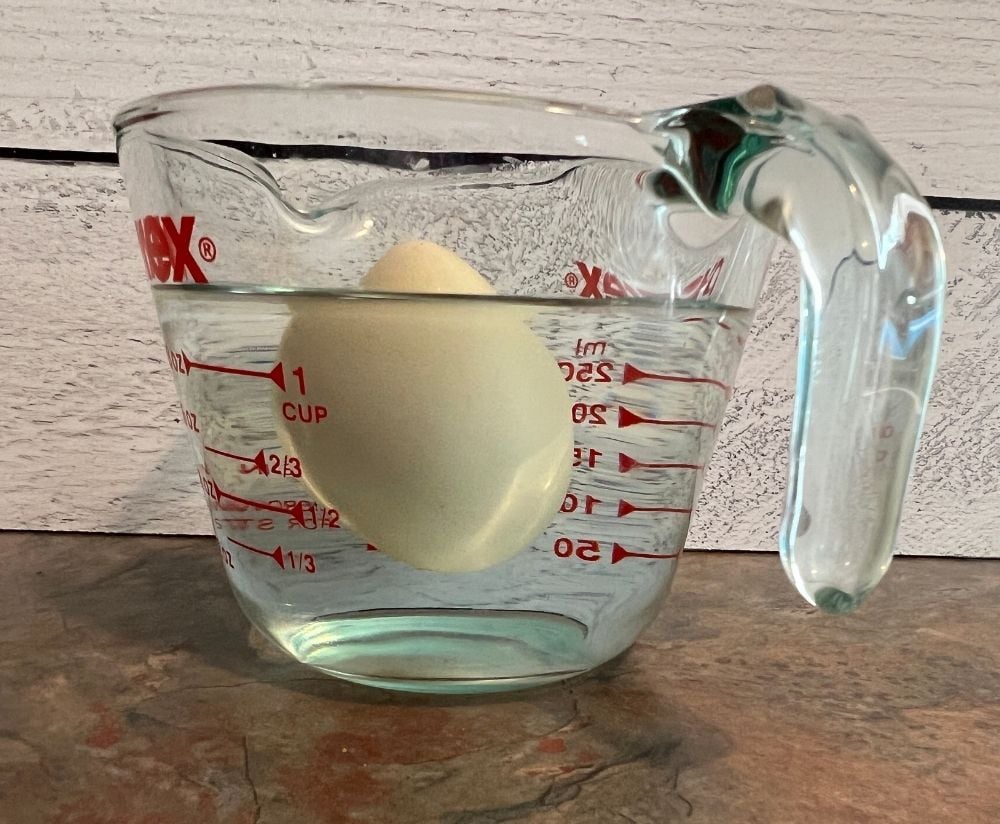
- Float test: Place the egg in a bowl of water. Fresh eggs sink and lay flat. Older eggs may stand upright or float—this doesn’t necessarily mean they’re bad, but it does indicate that they’re past peak freshness.
Should You Wash Eggs?
This is where opinions vary, but research shows that eggs last longer when refrigerated, and if they are refrigerated, they should be washed first.
Eggs are laid with a natural protective coating called the bloom or cuticle, which helps prevent bacteria from entering through the porous shell. However, this coating can also trap bacteria like Salmonella on the surface if the egg is soiled. If not removed, those bacteria can potentially migrate into the egg during storage. Even a healthy chicken can have salmonella in its body, so don’t assume that a healthy chicken can’t give you salmonella.
Why Washing Is Important (When Done Correctly)
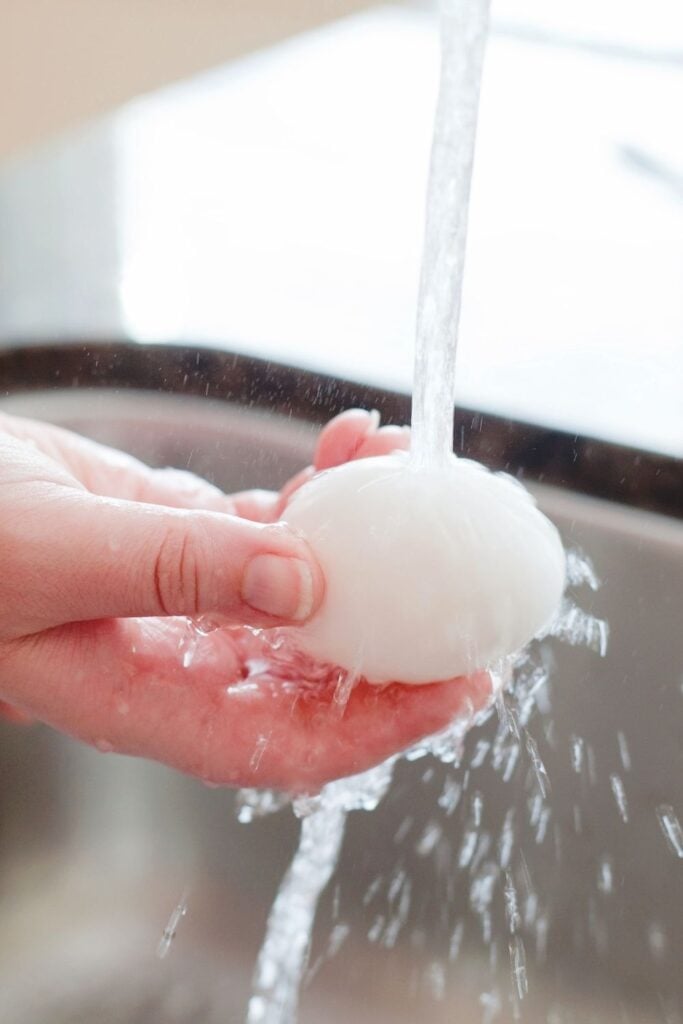
The USDA and most extension services recommend washing farm-fresh eggs under warm running water (warmer than the egg itself) and then drying them with a clean towel or paper towel. Avoid soaking eggs, as this can draw bacteria into the shell. Once washed, they should be refrigerated immediately.
In the U.S., commercial eggs must be washed. Research shows that washing significantly reduces the risk of Salmonella on egg shells—as long as it’s done with proper water temperature.
What About Unwashed Eggs at Room Temperature?
In many parts of Europe, unwashed eggs are kept on the counter with no issues. That’s because their egg systems are designed around keeping the bloom intact, maintaining flock health, and vaccinating chickens to reduce Salmonella risk. However, eggs kept at room temperature still do not last as long as those kept refrigerated.
When eggs are kept in the refrigerator, they don’t usually become rotten — they just dry out. The longer they are in the refrigerator, the bigger the air pocket becomes. We have even found the occasional egg that was lost in the back of the refrigerator, and it’s so lightweight that we have broken it open out of curiosity, and it’s completely dry inside. On the other hand, when eggs get hidden outside by a hen, they do wind up getting rotten and eventually exploding.
Summary: Best Practices for Egg Storage
- Wash eggs gently in warm water if you are storing them in the fridge.
- Refrigerate eggs as soon as possible after collection — and definitely if they have been purchased at the store, because they have already been washed, which means the bloom has been removed.
- Use eggs within 4 to 6 weeks for best quality and safety.
- Always discard eggs that smell off, have cracked shells, or float and smell bad when cracked.
By following science-based egg storage practices, you’ll keep your eggs fresher longer—and safer to eat!
Pin for later!