Episode 177
For the Love of Goats
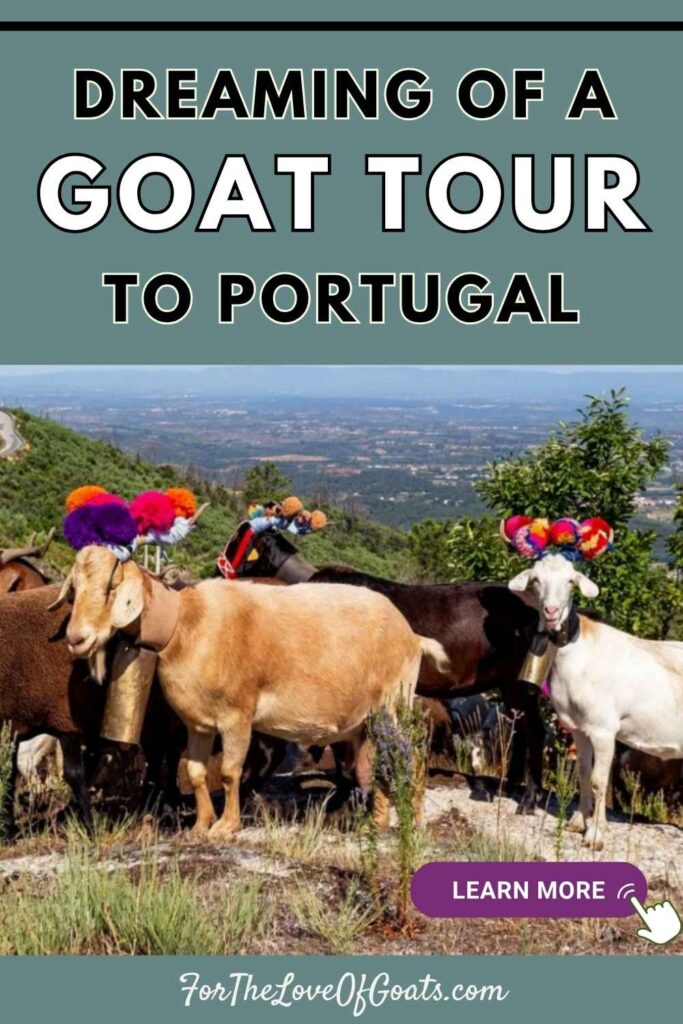
If you’ve ever dreamed of combining your love of goats with a European adventure, this episode is for you.
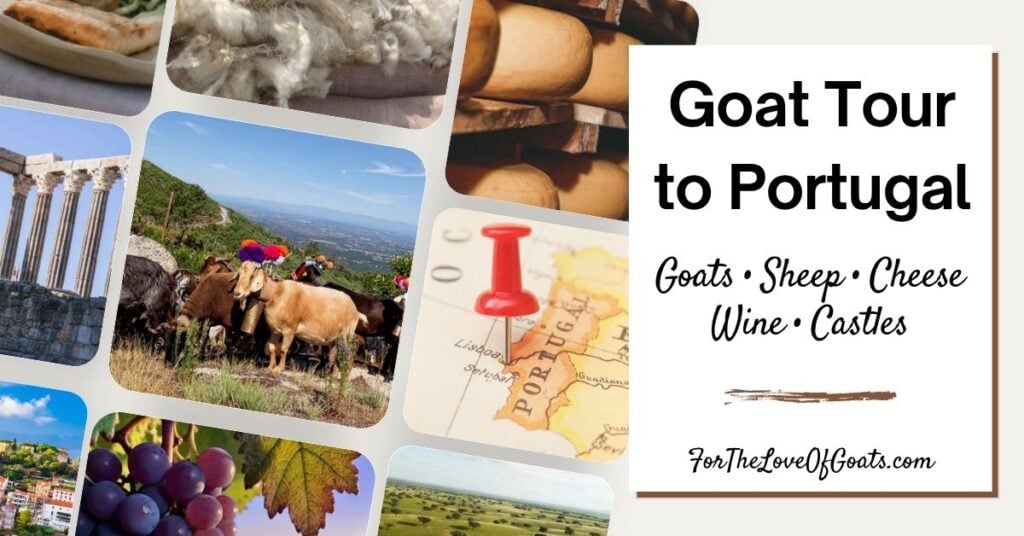
In today’s episode, Deborah Niemann is joined by Janelle Holden, author of the From Montana to Portugal Substack newsletter, to talk about an exciting upcoming goat and sheep tour through Portugal. Together, they share how the idea came about, what participants can expect, and why Portugal offers such a unique opportunity to learn about small-ruminant agriculture while experiencing the country’s incredible culture, food, and scenery.
The tour will take travelers through Portugal’s mountainous Serra da Estrela region and the agricultural heartland of Alentejo, where they’ll visit goat and sheep farms, learn about traditional cheese making, tour a renowned wool factory, and discover heritage breeds that have been raised in Portugal for centuries. Along the way, they’ll also experience local wineries, cork forests, castles, and some of the country’s most celebrated cuisine.
Deborah and Janelle discuss the value of visiting farms in different parts of the world, seeing a variety of production systems firsthand, and learning from producers who have adapted to unique climates, landscapes, and traditions. They also talk about Portugal’s distinctive cheese-making practices, including the use of thistle rennet, as well as the important role goats and sheep continue to play in preserving local culture and agriculture.
Whether you’re interested in goats, sheep, fiber arts, artisan cheese, wine, agritourism, or simply exploring a beautiful country with like-minded people, this episode offers a preview of an unforgettable experience.
Featured Guest
Janelle Holden – Author of the From Montana to Portugal Substack newsletter, agricultural entrepreneur, and Portugal resident who specializes in helping visitors discover the country’s culture, food, and agricultural traditions.
Trip Information & Registration
- Goat Tour to Portugal: October 25–November 1, 2026
- Watch the Webinar Recording
- Tour Registration & Deposit
Listen right here
Don’t miss future episodes of For the Love of Goats!
Subscribe on Apple Podcasts, Spotify, iHeart, or your favorite podcast app.
Transcript
Intro 0:03
For the love of goats, we are talking about everything goat, whether you’re a goat owner, a breeder, or just a fan of these wonderful creatures. We’ve got you covered. And now here’s Deborah Niemann.
Deborah Niemann 0:18
Hello, everyone, and welcome to today’s episode. This is gonna be so much fun, and I mean 100% fun. We’ve got nothing but good news, and rainbows, and butterflies, and fun stuff to talk about today.
Deborah Niemann 0:31
I am joined by Janelle Holden, the author of the Substack newsletter “From Montana to Portugal.” We have been friends for at least six or seven years, when we were in a business mastermind together, and we stayed in touch, and three years ago she moved from Montana to Portugal, and we were recently talking, and came up with this idea of taking people to Portugal on a tour of goat and sheep farms, and of course wineries, and that’s what we’re going to talk about today. So, welcome to the show today, Janelle.
Janelle Holden 1:05
Thank you, Deborah. I’m super excited to be here too. You’re right, this is like a rainbows and unicorns and cute animals podcast that includes castles and wine tasting and cheeses and like all the good things of life. I’m very excited to discuss what we’ve cooked up together as a surprise for listeners.
Deborah Niemann 1:25
Yeah, I am too. So, I know I have wanted to do this for a really long time. Part of it is because I have members all over the world. We have Goats 365 members who are in many different countries, including some in the European Union, and it’s challenging for me to give them the best information, because I’ve never been on a goat farm anywhere in Europe. You know, I’ve been to Europe, but I’ve never been to a goat farm, and so I’ve always wanted to go for that reason, just so that I could get some really good context in terms of what it is like to raise goats there, and so I wanted to do it for that reason.
Deborah Niemann 2:03
And then the reason I wanted to take people with me is because we’re gonna see a lot of different farms and a lot of different setups, and I know that I personally used to dream of having a goat dairy, and then I got incredibly lucky because about 12 or 13 years ago there was a group in Illinois that had a three-day agritourism workshop. We started out at one goat dairy and then took a bus out to various other dairies and a winery and a pumpkin patch, and I learned in those three days that I really did not want a goat dairy.
Janelle Holden 2:43
Yeah.
Deborah Niemann 2:44
I feel like if anybody has any romantic dreams of any kind of an agritourism operation, whether it’s with their goats or sheep or a pumpkin patch or whatever, that it’s really incredibly helpful to see as many different farms doing the thing that you think you want to do. The best case scenario is that you say, oh my gosh, this is it, this is my idea of fun, I want to do this for the next decade. Or equally good is for you to come to the conclusion I came to 12 or 13 years ago, which was, oh no, this is fabulous, it’s a great place to visit, but it’s not for me as a business.
Janelle Holden 3:25
Exactly.
Deborah Niemann 3:26
Let’s talk a little bit about some of the places that we’re going to be visiting when we go.
Janelle Holden 3:33
Yeah, so you and I designed this trip together, me with a lot of insider knowledge about Portugal, fortunately, as well as an agricultural background. So for listeners, I also grew up on a cattle ranch. My family still owns a working cattle ranch in Montana, and we still host visitors from all over the world to come and see that ranch on different tours.
Janelle Holden 3:55
And so it was such a fun blend to be able to take my background in agriculture, especially since I had had goats as a kid, and now get to see as an adult goats, and really love them, and also not want to have any of my own right now, because I live in the middle of the city, but get to go see them, and to experience that delight and joy with people. And people I know who visited my own family’s ranch, they come from Kyrgyzstan and all over the world, just to see how other people do their businesses, because that’s super valuable to them, and to understand the industry that they’re in a little bit better, as well as have fun. It’s a great way to honestly have a good business expense, I would say, as well as get to see something and have something that is really unique.
Janelle Holden 4:40
And I don’t know of any other goat tour in Portugal, so this is definitely a first. You’re not going to find this at any travel or tourism place, or even really in any magazine brochure. But what we came up with is a blend of both the mountains and the plains in Portugal. So, Portugal is about the size of Indiana, little bit less than Indiana, but I still see it as this huge country because it’s so varied geographically, but most of the agriculture is, of course, inland, and there’s a couple of places that are really super famous for sheep and goat production, as well as cheese making and wool factories, and all of the various products that come from sheep and goats.
Janelle Holden 5:21
We’re going to be going first to the mountains, so people land in Lisbon. They’ll get to stay over, maybe here, or come right first thing in the morning, and we pick them up from the airport. And then on the way to the mountains, we’re going to do farm experience, sheep and goat farm, and do some cheese making. And then we’re going to land in the Serra da Estrela region, which is the mountainous region of Portugal, the only place where it snows. I don’t think it’ll have snowed by then. It’s the end of October, but still not quite snowy yet here in Portugal. And stay at a five-star location there while we visit different shepherding and a wool, very, very famous wool factory. So that’s the first part of the trip.
Deborah Niemann 6:02
One of the things I love about the hotel are the panoramic views. The views from the rooms are just stunning. It’s so beautiful.
Janelle Holden 6:12
We’re up in the mountains, people. You’ll be able to see the Zêzere Glacier Valley. I’m putting together pictures and things for an Instagram reel. We have a full webinar that Deborah and I did that, I think she’s going to be posting as well. If you’re interested, so you’ll be able to see the exact location, the exact hotel that we’ll be at, but what you won’t be able to access on your own is really all the tours that we’re planning with different sheep and goat and agricultural farms, and most all of them are small, and these are not big operations.
Janelle Holden 6:43
In some ways, apples to apples, probably with the people who want to come. We’re not talking about seeing big dairy operations, although we could include that. You never know, we have room in the itinerary to include some things. But from the mountains, so we’re going to stay at this five-star property. It’s going to be amazing food, and when I mean, amazing food. I really truly mean amazing food. Portugal’s food has just blown me away with its quality, the freshness of the produce, the vegetables, the fruits that come from here. I didn’t know that Portugal had its own kiwis until I moved here. I’m like, they have kiwi fruits here, just incredible right now. The fruits are phenomenal fruits that I’ve had before, fruits that I’ve never had before. The peppers that are grown here are gigantic. So, the food is exceptional, the wine is exceptional in Portugal as well. And I first said, okay, I know we’re going to be at farms, but this is not a farm stay, right? You’ve done farm stays, right, Deborah? Little bit different.
Deborah Niemann 7:39
Yeah, definitely different. So, because we are going to be staying in some very nice small local boutique hotels, actually only two, so don’t worry, you’re not going to be like packing up every day and going to a new hotel. I don’t like to do that. I think if I’m going to be somewhere for a week at most, I want to be in a couple different hotels. So, we’ve got three nights in each hotel, and then on the last day, we head back to Lisbon, and you will get a final night in Lisbon if your flight goes out the next morning, but if you do want to go out, if fly out at midnight, then you know you’ve got a hotel to kick back and relax in until that flight is ready to head out.
Janelle Holden 8:18
Yeah, for the logistics people, let’s just do this real quick, and then I’ll go over the second half of the trip. So, the actual tour starts on October 25. It’s a Sunday, so at the very latest, you’re going to want to fly out on the 24th and you’ll probably fly out overnight from the United States. So, almost all the flights fly out overnight, so that you land in Europe in the morning. Flights are not included in the price point that we have, based on wherever you’re at in the country. I’d say you could probably estimate anywhere from 700 to 1200 economy flight price points.
Janelle Holden 8:55
So, you could either fly on the 23rd and get a head start and catch up on your sleep, but we’re going to pick you up on the 25th. So, the morning of the 25th things start, and then they end, actually a week later, on November 1st. You could fly out the night of the 31st if that ends up working out better for your schedule, but I think most people are probably going to be flying out on the first. So, you’re with us for a week in Portugal in a couple of different varied landscapes. So we’ve got the mountains, and then from the mountains we’re going to travel south to the Alentejo, which is Portugal’s most famous agricultural area, where we’ve got cork trees and castles and wineries to visit and heritage breeds like the black pigs that we’re going to see, as well as a 16th century farmhouse that my friend owns, so she has offered us very kindly a lunch there, as well as the possible opportunity of seeing a small goat operation near her.
Janelle Holden 9:57
Well, there’s a lot in that place we’re going to stay at a convent. It’s a beautiful hotel that was turned from a historic convent into a hotel. It has a view of a castle. There’s Roman ruins right there. There are places to visit in the city that are amazing. In one instance, I would say there’s the Chapel of Bones, which I’ve been to, which is a fantastic experience, makes you think of your own mortality, but really, really an incredible experience. And the Alentejo is known for basically the best food in Portugal. It’s the most rural area. The people there had to learn how to make the most simple dishes taste the best with the resources that they had, because they went through a lot of economic trials, let’s put it that way, and as a result, the flavors are phenomenal, the olive oils, the garlic, the truffles, the everything, it’s just really, really, really good food. So you’re going to sleep well, and you’re going to eat well, and you’re going to see some really unique things with the back door open to some goat and sheep production.
Deborah Niemann 11:05
Absolutely. And I’m excited about those cork trees, because I was looking at the pictures online, and it looks like the kind of thing that is like drawn in a fairy tale, like in a children’s book. I’ve never seen a cork tree, so when I saw the pictures, I was like, oh my goodness, that looks so cool. So I’m really excited about seeing the cork trees too, because I don’t know, the longer I’ve lived on a farm, the more I’ve come to appreciate all of the different plants and trees and stuff, and it’s a cork oak, so that’s the thing too, like our farm is Antiquity Oaks because it is covered with oak trees, but all of our oak trees are like burr oak and white oak, and I don’t even know that we have cork oaks in the United States.
Janelle Holden 11:52
Yeah, that’s a good question. I don’t know if we do either. It’s one of the top crops in Portugal, and it’s not only used, obviously, to cork wines, but it’s used in purses, in fabrics, and it’s a very sustainable textile. I guess they cut the outer edge of the tree and leave it to heal, so they’re not cutting down the full tree, it’s just parts of the tree that are taken out, and then they’re very knowledgeable about how much they can push the tree, basically, but the trees are are very old, and it’s a very sustainable industry. It’s, it’s fun. The trees are absolutely gorgeous. Some are planted, some are native.
Janelle Holden 12:38
The landscape is, in some ways, what you might think of when you think of, like, an African Safari or Delta, so different from the mountainous region between the two of them, and then we’re going to come back into the city at the end of that, and you know people can opt to stay in Portugal and go see and explore the coastlines, which is absolutely fabulous, wild and gorgeous beaches as well here, but we’ll be in Lisbon at least for one night, and people can see the Tagus River, and some of the more famous sights in the city, too, with us.
Deborah Niemann 13:08
I’m so excited about all the things, but I realized we hadn’t really talked much about the goats, and so one of the things we’re going to be going to a goat dairy and see them make cheese, and also have a wine and cheese tasting. There’s a number of wine and cheese tastings on the itinerary, I think.
Janelle Holden 13:23
Yes, there are. In fact, it’s some very, very famous wineries, places that very famous people have come to Portugal just to taste the wines there. You’re gonna get to pair wines, the exact wines that go with goat cheese. You’re gonna make the goat cheese. You’re going to stay in a hotel that has wool from that region, very, very fine wools, it’s a textile manufacturer, as well as clothing, like a jacket from there is 250 euros. They’re beautiful, beautiful pieces of clothing, beautiful throws. Basically, get to see every part of how people value goats and sheep, and the different types of goats and sheep in Portugal, which I think I sent to you an article about at least seven native breeds in Portugal of different types of goats, and I know there’s very similarly heritage breeds of sheep as well, and as you know, heritage breeds are disappearing around the world, and it’s very exciting to be able to support heritage breed agriculture as well.
Deborah Niemann 14:19
When we started our farm in 2002, every single breed of every animal that I brought onto that farm came from the Livestock Conservancy’s conservation priority list, and I’m so happy to say that some of those breeds are no longer on that list, because by making people aware of them, people started breeding them more, and they’re no longer endangered. It’s crazy to think that when I started with Nigerian dwarfs in 2002 my very first goat actually, her registration number was only 1000 something, and now Nigerian dwarfs are like the most common breed in terms of registration in the US, like they’re super popular, at least for dairy breeds, I’m not sure how they stack up with all the rest, but.
Deborah Niemann 14:59
For dairy breeds, they have more registrations than anybody, so that’s amazing to me that they’ve come from the brink of extinction to being so popular, and it all happens because people become aware, and they’re doing great things too, with also with the sheep, like we had Shetland sheep for a number of years, and the Shetland sheep are now on the recovering list, because wool is just amazing, and so I’m also really excited about seeing the sheep and visiting the wool factory and checking out all of those amazing different products that they’re making with the wool too.
Janelle Holden 15:37
And you’re going to be staying in a hotel where the products are used throughout the hotel because the hotel owns the wool manufacturing facility as well, so that’s part of why we get this great back-end tour, behind the scenes tour of the wool manufacturing, and I think there’s going to be surprising, it’s going to be interesting for people culturally. Portuguese language is not the easiest language in the world. I’m still learning it, for sure, but it’s beautiful. It’s much different than Spanish, but a lot of people here speak English fluently as well. You’ll be able to understand, and I’m working on making sure that we have good translations throughout the tour.
Janelle Holden 16:14
Speaking of heritage breeds, so I was looking last week at the dogs that are Portuguese dogs that were raised just to protect sheep herds and goat herds, and they are so amazing as well. There’s just such cute dogs here, some that looks like German Shepherds but aren’t, some that look like Border Collies, slightly different. So I think that’s a really fun thing too, that we’ll be able to see is just what kind of dogs that are used in what kind of practices that people use to protect and keep their herds healthy here, so those are some things. I just want to be clear, I am not the goat expert in the room or the sheep expert, although my family had both, but Deborah certainly is, and we are committed to getting people who will teach from the Portuguese culture perspective exactly how people do goat and sheep husbandry here.
Deborah Niemann 17:03
And I’m really excited. It’s so funny you mentioned the dogs, because we hadn’t talked about that yet, and I just thought about that a couple days ago, because we have a Great Pyrenees and we have Border Collies, and it just all of a sudden popped into my head, oh my goodness, I wonder what breeds they have in Portugal, because I know that every country in Portugal has their own unique breeds of livestock guardians and herding dogs and stuff, so I’m also really excited about seeing them, and my brain is like, oh, maybe you could import one, and I’m like, no, no, no, no.
Janelle Holden 17:36
Although I did see one in the city the other day, and I thought, oh my gosh, wow, that’s a lot to handle. A giant dog like that, who’s used to it, be like having a great Pyrenees in the city. So, there’s big breeds, there’s little breeds. I would like to get a clinic for people around that as well. I’m working as well on a soap making clinic. There’s goat soaps that are sold here too. So, not everything is completely planned out yet, but we know the regions that we’re going to go to, and we know our intention is to make each day have a varied itinerary, so there’s one thing that you’re looking forward to seeing or learning or on tour for that day, and then there’ll be plenty of time to explore and rest and just enjoy being in Portugal for the week too, because I think that’s important as well, is giving people a chance to acclimate and write down their thoughts, or think about things, or go to the spa, because our hotels, they have both have really nice swimming pools and spa facilities.
Deborah Niemann 18:37
Yeah, and if you’ve got a partner who wants to come with you who’s not quite as much into goats or sheep or whatever as you are, and they don’t want to go on a tour, that’s fine, they can, you know, stay at the hotel and go to the spa, or sleep in, or whatever. So, although I know when we did the webinar, somebody said, “Who doesn’t love goats?”
Janelle Holden 18:58
That’s true, although there are people.
Deborah Niemann 19:01
Yes, there are.
Janelle Holden 19:01
It’s okay, though. There is so much to see and do here in Portugal. I can’t even put it into words how beautiful this country is, and how amazing it smells even. You just wander through the gardens here, and you smell jasmine and orange blossoms. You see lemons on trees and citrus and avocados growing, and it’s like this, just this gorgeous blend of historic castles, as well as, you know, small little trees and biological diversity, and it’s so colorful. All the buildings are really, really colorful. I love this country. I can’t really say too many words about it. It’s so beautiful.
Deborah Niemann 19:41
It is beautiful. Ever since we started talking about this, I’ve been watching videos on the Discovery Channel and on YouTube, and everything, and everything I see, I just.. I smile so much, my cheeks get sore. It’s beautiful, and I just keep thinking, oh my gosh, I can’t wait to see this.
Janelle Holden 20:00
Yeah, the country really lights you up, and the light here is very special too. It bounces off the Tagus River. It kind of glows throughout the city. The light in the Alentejo and in the mountains is different too. I think people are going to come back with joy in their soul, a joy de vivre, just a joy for life, having been in this country and seeing some things that we just don’t get to see in the United States, the history, the castles in particular.
Deborah Niemann 20:26
Yeah, I love architecture so much, and in fact, it’s funny, I get architecture digest, and the cover story just got it a couple days ago. The cover story this month is about someone’s country house in Portugal.
Janelle Holden 20:41
Awesome, you’re kidding.
Deborah Niemann 20:43
I’m totally serious. So, I, when I saw that, I was like, their country house in Portugal, and it’s a famous person who I’m sure I should know, but I don’t. So, I was like, oh my gosh, and I flipped it open to that, and was really soaking it in, and they had a picture of their orange tree in their yard.
Janelle Holden 20:57
Oh, so nice. Yeah, nice. For those of you who are like, okay, all right, I can make it. It’s October 25 through November 1. I can do this again. I’m ready. You’re probably wondering other logistics and questions. So, originally we only had 12 spots. We have two people already who’ve said yes and put down a deposit, so we have 10 spots left. The deadline to sign up is by the end of the day on June 30, close of the midnight on June 30, and to sign up and reserve your spot, whether it’s a single or a double occupancy, we’ve got different price points for both. Is a $500 non-refundable deposit, and then we’re gonna just make sure that the group coalesces by the first of July, and we get started making sure that you come prepared and excited and ready to go in October.
Deborah Niemann 21:43
And we’re going to have a Zoom call with everyone, so that you can ask your questions. The price is 5500 for double occupancy, or 6500 for single occupancy. We may have only nine spots available, because I just got an email last night from someone who’s traveling alone, and so if you’re wondering, “Oh, I’m traveling alone, do I have to pay 6500? The answer is no, not if you want to share a room with somebody, and in fact, the person who just emailed last night said she would be happy to share a room with somebody, so if you want to share a room with somebody, then you can sign up for double occupancy, and if we wind up not having another person sign up for that, then you would just get a single by default and only have to pay for the double occupancy.
Janelle Holden 22:30
Yeah, yeah. Which, okay, there’s a few reasons for you to do this quickly. Number one is to secure your spot, but number two is we’re doing a first come, first serve, we’re getting the type of room that you want, because the boutique hotels that we’re in, they’re not standardized hotels like Hilton or something, they have different types of rooms with different views, and so you’ll be able to choose the room that the one that you like the best, is it the best view, is it the type of bed that you want, is it the bathroom configuration, whatever it is that really makes you excited, you’ll get first priority, and we’ll go down the list when people book. All the rooms are going to be great. I’m just going to say that, but there are differences, so people have the opportunity there.
Janelle Holden 23:14
And then we’ve got a couple of fast action bonuses if you pay for the entire thing at once. We’ve got a special call with us that you can book to get you prepared for the trip one on one with us, and then we’ve got a special gift that we’re going to leave in your room, so that when you arrive, you feel really get the VIP special treatment. So basically, I’m going to urge you, if you really want to do this, don’t hesitate, because I think we’re going to fill every single spot. We had 173 people joined the waiting list as soon as we announced it, and we’ve only really opened it to less than 20 so far. I’ve really seen the presentation that we’ve done on it, so now we’ve decided, okay, we’re going to open it up to everybody, and I think this is going to go fast.
Deborah Niemann 23:56
Yeah, I think so too, because if you love goats and you love traveling and sheep or wine, like there’s a lot of things.
Janelle Holden 24:04
Or textiles, or wool blankets, or knitting, you know, or soap making, or I’m also trying to book a goat packing tour, so goats that pack, they wear little packs while you’re hiking in the mountains, and a picnic with them, we’re going to try to hit all the different areas that people will love when they raise goats, whether that’s information or fun or the herding part of things, h e r d, the herding goats, or the products that come from them, or if it’s wine and cheese that’s your thing, you’re gonna have a great time. The wines from Portugal are primarily not from individual grapes, either, they’re from regions, because they’re a blend of different grapes.
Janelle Holden 24:45
People will say, “I’d like a wine from the Douro region, which is northern Portugal, or “I’d like a wine from the Alentejo region. And each region has its own specialty and terroir of wines, and so you’ll learn about that, and the different ways that wines are made here, I can honestly say that the wines that I’ve had here are the best that I’ve ever had in the world. I’m no wine expert, but I’ve been fortunate to be able to try a lot of different wines, and they’re really incredible here. So, whatever people are into, I think they’re gonna find on this trip.
Deborah Niemann 25:16
I love all of those little details. Every time you and I talk, there’s more that I love about what you say, and I am very much into local food, so the wines we have are all not just going to be local to Portugal, they’re going to be local to where we are staying. That makes me really excited, you know? If I go to a place and I see, like, a local kombucha locally brew. Oh, I gotta try the local kombucha
Janelle Holden 25:42
And the goat cheeses here are over 1000 years old. They’ve been making cheeses here, so the recipes for that, plus the way that they’re curdled, is different. They use a specific type of plant.
Deborah Niemann 25:53
Oh, they use thistle.
Janelle Holden 25:54
Yeah, they use thistle.
Deborah Niemann 25:55
People ask me about this because I teach cheese making, and so in the United States, what most of us do is that we go online and we go to a cheese making supply company and we purchase like an animal rennet or a plant rennet, and you don’t know what plant that comes from, but in Portugal it is part of their culture that they use the thistle rennet, which people have actually asked me that before, they’re like, “Do you know how to make thistle rennet it, and I say no, I don’t. I buy it. Here’s the website I buy my rennet from, and you can buy a plant rennet from them if you want”. If you know, if you’re a vegetarian and you don’t want animal rennet, so that is another thing too. I’m so glad you mentioned the rennet, because that is something that I am very, very excited about. So, if you’re a vegetarian who avoids animal rennet in your cheeses, this is really gonna be exciting, because they don’t use the lining of a calf stomach or the lining of a goat’s stomach or a sheep stomach, which is what animal rennet is, that’s where it comes from, they use the thistle rennet.
Janelle Holden 26:58
So fun.
Deborah Niemann 26:59
Yeah, so I’m really excited to learn more about that.
Janelle Holden 27:02
Me too, and I want to address a potential question as well about different dietary preferences. So, I have avoided gluten for a very long time, as has Deborah. I have a very severe allergy to peanuts, and I’ve been fortunate that the food here is so fresh and so easy to avoid a lot of the common triggers or allergens that we have in the United States, that it’s actually really easy to country to travel in, because things are very flavorful but simple, so you don’t have as many sauces as some cuisines might have that would have ingredients that might trigger people, the meats are usually grilled with just salt and pepper and olive oil.
Janelle Holden 27:44
You can choose bread or not. A lot of times, there will be gluten-free breads available. We’re going to be having gourmet breakfasts at the hotels, and these are gourmet. There’s like everything that you could want, from eggs to fresh juices to, you know, animal products, no animal products. So I just want to encourage people, if you feel like, “Oh, I can’t travel because I have food sensitivities”, this is actually a great country to travel in and experience really healthy cuisine. I’ve been super fortunate here to be able to avoid any of my triggers, and also actually to heal some of my digestive stuff, because the fruit is so fresh and not treated in the same way that it is in the United States.
Deborah Niemann 28:25
That’s awesome. I’m really excited about that part too. And I’ve heard so many people say that when they go to Europe and they have food sensitivities, that it is a much easier place to travel than in the US, because of that.
Janelle Holden 28:37
Yeah, you would think it would be harder, because language differences, but just because of the simplicity of the foods, whole roasted potatoes, the green beans that are served, there’s a cornbread kind of stuffing that often goes with traditional foods, there’s some bean dishes and bean stews, feijoada that are delicious as well. By the way, Portugal is also very well known for its soups, its soups and its juices, amazing, amazing, amazing, amazing. And the soups are usually made with very simple ingredients, but they taste fantastic, and they’re super healthy.
Janelle Holden 29:11
So oftentimes my lunch menu here, if you go to an average restaurant and you ask for the menu, it’s a different meaning than what we have in the United States. When we ask for the menu, we think, oh, we have all these choices. What they mean by little lunch menu, it’s basically the lunch special, but it usually includes a soup, a main dish, a drink, a coffee, a dessert at the end, and they’re all usually freshly prepared. Everything’s included: your lodging and your transportation to and from places, and the meals in the full price point. The only thing that’s not is your airfare and insurance, and will help you get travelers insurance and make some recommendations around that.
Deborah Niemann 29:53
Well, I am so excited, and this has been so much fun to talk about this. Like I said, every time you and I talk, I get more and more excited. And this was no exception. So it’s going to be great, and I’m looking forward to meeting the people who are going to travel with us.
Janelle Holden 30:09
Me too, me too. Yay! So we’ve got nine to 10 more spots if you want one, and now is the time. I think Deborah will likely put a link to sign up with the deposit in the description of the podcast.
Deborah Niemann 30:22
There will be a link in the show notes, so you can send in your $500 deposit per person to hold your spot. And then the reason we did it that way is when you do that, it immediately triggers a form that will get sent to you that you fill out and say whether you want a single or double occupancy, and then if you want two single beds or a double bed, so that way we can make sure that everybody, like Janelle said, it’s first come, first serve, but you know we get everybody in the type of accommodations that you want. We’ll send you the invoice then for the remainder of the payment.
Janelle Holden 30:56
Yeah, and just imagine a week in Portugal in the fall, seeing things that people have never seen before, and you get to experience and take back all that knowledge and yumminess and goodness back with you to the United States. Just how you’ll feel after all of that. I think it’s exciting, it’s fun, it’s playful, all the good feels. So, I hope people join us on it, because we’re gonna have a great time.
Deborah Niemann 31:18
Yeah. Thank you so much for joining me today, and talking about this.
Janelle Holden 31:21
Oh, you’re welcome, Deborah. Thank you for the idea. I can’t wait. October is going to be here before you know it.
Deborah Niemann 31:27
And that’s it for today’s show. If you haven’t already done so, be sure to hit the subscribe button, so that you don’t miss any episodes. To see show notes, you can always visit fortheloveofgoats.com and you can follow us on Facebook at facebook.com/LoveGoatsPodcast. See you again next time. Bye for now.
Pin for later!