Episode 178
For the Love of Goats
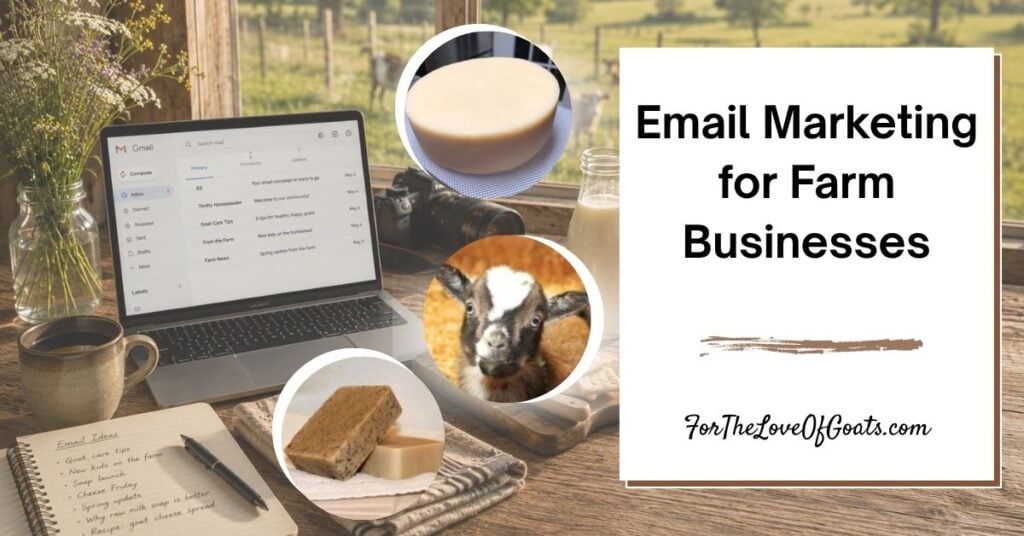
Email marketing has always been a valuable way for farm businesses to connect with customers, but the rise of AI is changing what stands out in the inbox. As more businesses rely on AI-generated content, authentic emails that sound personal and human can be even more effective.
In today’s episode, Deborah Niemann welcomes back email marketing expert Liz Wilcox to talk about what has changed since her first appearance four years ago. They discuss why email remains more dependable than social media, how often farm businesses should contact subscribers, and why sharing real stories, personal updates, and original farm photos can help build stronger connections.
Liz also shares practical ideas for growing an email list, especially for local businesses selling goat cheese, goat milk soap, goat-related experiences, or other farm products and services. She explains how farmers markets, local events, and collaborations with other small businesses can help attract subscribers, and why even a list of 20, 50, or 100 people is worth using.
They also discuss what to write in a weekly email, how to restart a list after months of silence, and why every business should have a welcome email. Liz explains how AI can be useful for brainstorming and ideas, but emphasizes the importance of editing carefully so the final message still sounds like you.
Featured Guest

Liz Wilcox – Email marketing strategist and founder of the Email Marketing Membership. Liz helps small business owners create simple, effective email marketing systems that build relationships and increase sales without spending hours writing emails.
Resources & Links
- Liz Wilcox’s Email Marketing Membership
- Email: The GOAT for Marketing Your Goat Business (previous podcast episode)
- Check out our Goats 365 membership
Listen right here
Don’t miss future episodes of For the Love of Goats!
Subscribe on Apple Podcasts, Spotify, iHeart, or your favorite podcast app.
Watch the video version
Transcript
Intro 00:03
For the love of goats, we are talking about everything goat. Whether you’re a goat owner, a breeder, or just a fan of these wonderful creatures, we’ve got you covered. And now, here’s Deborah Niemann.
Deborah Niemann 00:18
Hello, everyone, and welcome to today’s episode. If you saw the name on this episode and thought that looks familiar, it’s because it is. Liz Wilcox joined us four years ago to talk about how email marketing is the GOAT of marketing. It is the greatest way in the world to market to your people for multiple reasons, and it’s been four years, and so Liz is still going stronger than ever and helping more people than ever with her email marketing. I know a lot of our listeners joined her membership last time after hearing her on the podcast, and today we are not going to rehash everything that we did last time. So you might still want to go back and listen to what we did four years ago, but before we get started, welcome to the show, Liz.
Liz Wilcox 01:04
Hey, friends! I am so excited. I knew it was a long time ago, and I even told my friend before we hit record. I said, “Oh, I’ve been on this show before. I said, “Maybe three, four years ago”, and then I said, “No, it can’t have been that long ago”. But wow, time does fly. I’m really excited about this! The listeners here are the best, so I’m excited to give more value.
Deborah Niemann 01:24
Thanks. Yeah, I know it was fun for you to have people join your membership who were talking about goats.
Liz Wilcox 01:30
Yeah, I mean, not to jump into it, but y’all, like, there’s so much room for you know increasing sales, traffic, you know, whatever your objective is, because a lot of farmers and things like that are not emailing, right? And so it’s easy to stand out in the inbox. So I can’t wait to help people get better results.
Deborah Niemann 01:51
So the first thing I want to ask you about is what exactly has changed in the last four years with email marketing?
Liz Wilcox 01:58
It’s getting easier because of AI, and I don’t mean use AI to write. It’s getting easier to stand out in the inbox because a lot of people are using AI to write, and it’s starting to kind of all sound the same. I’m thinking of it as like AI sloptimization, right? And I know you, even if you don’t see it in the inbox, I know you know we’re all on social media. We we all see those same graphics that look the same, the same types of captions, that same AI voice that comes on our YouTube Shorts, right? And it’s becoming very similar in the inbox, right? Of you know a lot of people typing into Chat or Claude or whatever, saying you know, write me an email for da da da, and it just sounds the same as everybody else. So it’s actually really even easier now to stand out if you just write the email yourself. Yes, sure, use AI to give you ideas, maybe to polish it up, shorten it, have ideas on how to make it longer, but really, if you can write the bulk of your emails, you are going to stand out like no other.
Deborah Niemann 03:08
Yeah, I’ve heard people say that, like basically experts in all the things, you know, experts in social media and YouTube and podcasting. You know, it’s like if you’re a human being and interacting as your human self that gives you a leg up on everybody who’s trying to take the shortcuts and have AI do their stuff. Everything, yeah.
Liz Wilcox 03:28
And here’s the thing: if you’re like raising goats, and you know you have land, you have these animals, you have your products, you can take pictures of those. That pictures that you know can’t be replicated, right? And that’s going to even stand out. Right, don’t worry too much about three paragraphs, a beginning and an end. You know, you can let your pictures sort of do the heavy lifting for you, and those are going to be so so unique and so different, and again, stand out from that. You know, sloptimization that everyone else is churning out. Oh, I’m getting excited.
Deborah Niemann 04:07
Yeah, I know. Like social media algorithms are changing like crazy, and you know, it used to be really easy to sell stuff on social media, and that has gotten a lot harder now. I think that’s one of the big things I’ve seen is that if you have something to sell people, email is more important than it’s ever been. Do you see that too with all your clients?
Liz Wilcox 04:29
Yeah, for sure. Because email it’s very slow to change, right? The thing about social media is it’s centralized. One guy owns the whole thing, right? Mark Zuckerberg owns Threads, WhatsApp, Instagram, Facebook, right? And if he or his board decide X, Y, Z, then that’s going to happen nearly immediately. With email, it’s so much different. It’s a decentralized platform. You have Yahoo, Google, Outlook. You know, ProtonMail, Triton, all of these players, plus billions of users, right?
Liz Wilcox 05:05
And that makes it really slow to change. It’s much easier or simpler, we’ll say, to figure out email to say, okay, you know, this is my cadence, this is how I’m going to stand out, and then y’all, email predates the internet. The first electronic mail was sent in 1979. Okay, and so it’s just this really easy way to connect, and also people know that. So people, when they wake up, you know, what’s the first thing you do? A lot of us check our emails, right?
Liz Wilcox 05:28
Oh, we’ve got you know Gmail pops up, our Apple Mail, whatever. Let me just check my email real quick, and so that is why I really recommend you know outside of social media. Yeah, it used to be easy to kind of sell over there. Now there’s so much competition and everything, but it’s easier to you know just send a direct message to someone’s phone via email, right? It’s going to pop right up to their home screen. They’re going to click on it, and they have this pattern of it, right? They’re doing it in the morning. They’re doing it when they’re bored. They’re doing it. Oh, got to check my email before I go to sleep, right? We have patterns of this.
Deborah Niemann 06:17
Exactly. I know. I’m definitely guilty of checking my email all the time. So last time you were with us, you encourage people to email at least once a month. In ideally, they would email weekly. Are you still suggesting people do that?
Liz Wilcox 06:31
Yes, I really suggest the once a week. If you’re at monthly right now, I want to invite you. I want to challenge you to increase that frequency because of AI. AI it’s made things so much easier, which means there’s just more content out there, and so we want to really make sure you know if they get an email come across their phone with your name on it that you’re going to open it, and so we don’t want people to forget about you. You want to stay top of mind. You want to become relatable. You want your people to know that you’re invested, right?
Liz Wilcox 06:56
And so, once a week is a great cadence, especially for you listening, because it’s going to allow you to talk about different things, become someone that you know they look forward to hearing from, especially if we’re using pictures or we’re sharing stories about what’s going on with the goats. That personalization is working so so much. Like Deborah said, you know everybody’s using AI. I’ve been hearing, you know, if you’re just a human, that’s going to really connect. So we want to make sure people don’t forget about you. We want to make sure. Oh, that’s Carrie. That’s Deborah. That’s Shahara. I know her. Oh, I love. You know, she always puts a picture in the PS, or you know, he always shares the story at the front. Right. Whatever you want to become known for, whatever’s simple for you to write, you want to become really familiar in the inbox. So I really invite you to go for that once a week email.
Deborah Niemann 08:04
Okay, I’m just making a note to myself here.
Liz Wilcox 08:07
Sure,
Deborah Niemann 08:07
Add go picture at end of emails.
Liz Wilcox 08:10
Oh, I love that. Yeah, just anything. Listen, anything that’s going to stand out, and then it’s obviously not AI. Anything that’s personal. So for you, it might be that P.S. Goat picture. For me, it might be oh, I got a new sticker for my cup, or oh, I heard Nsync on the radio, and so maybe I’m sharing what I’m hearing on the radio at the bottom of the email. We want to make that personal connection. It’s so important right now to not just be trying to push your soap or you know whatever other products you’re selling, it’s really important to make that human connection so people know, hey, that’s Deborah, hey, that’s Carrie, hey, that’s Liz. I really like them. I want to support them. I’m gonna open the email. I’m gonna click. I’m gonna buy.
Deborah Niemann 09:02
So, is there anything that you were saying four years ago that you would change now? Any advice that you’ve changed in the last four years?
Liz Wilcox 09:09
That’s a great question, and the answer is no. I would say more of the same, more personalization, more showing that you’re invested in your people, more staying top of mind. I hate to say that because I’m a minimalist. I like things lean and mean and trim, but there’s just so much nonsense out there that you want to just be light of joy, I guess, to your subscribers, and you can do that again with that personalization, with really connecting with your audience, so I guess it might not be that I’m talking about different things, but I’m emphasizing that connection piece, emphasizing getting replies, emphasizing getting clicks, right?
Liz Wilcox 09:53
And so, I want to get replies because it’s just one more way of connecting with your subscribers, and that connection piece is so important right now with the rise of AI and even with the economy. I know in North America more and more people are turning to starting their own businesses, are turning to side hustles, right? Because the regular nine to five isn’t working, which means there’s just more competition in the inbox. There’s more people emailing.
Liz Wilcox 10:23
AI makes it easier for everyone to start a side hustle, and so you’re not just competing against other farmers. You are competing against everyone in the inbox. You’re competing against me, against Shahara, against Nahaku, against the NFL, against Etsy, against Amazon against eBay, right? And so it’s actually easy to defeat those quote unquote competitors when you can get those replies. When you can get somebody say, “Oh yeah, you know, I got my first goat when I was seven,” or “Oh, I’ve never had a goat. I love that you send pictures. Send more.” Right? A nd so that is really, really important right now. So again, I don’t think I’m saying anything differently. I might just be emphasizing different things.
Deborah Niemann 11:09
A lot of goat businesses are national. You know, they may be shipping goat milk soap all over the country, but a lot of them are also very local. Like they’ve got a local goat landscaping business, or they have a dairy and they sell cheese, which is usually going to be pretty local because of you know shipping cheese is not cheap.
Liz Wilcox 11:26
Yes. So we don’t want to go that route.
Deborah Niemann 11:31
So how different is it for people who are emailing a small local list versus those people who have a more national list?
Liz Wilcox 11:40
So I think if you’re emailing locally, it can be a lot simpler, right? A lot of your leads might be coming from in-person events, right? Maybe you’re doing a collaboration, you know, at your local library, or you’re bringing your cheese to a vendor fair or a local farmers market, making sure you’re getting those leads so you can follow up. I just mentioned the thing about getting replies to make that connection. You have an amazing advantage.
Liz Wilcox 12:07
A lot of your leads are probably coming from people you’ve already seen face to face, right? What I would do to grow the list so you can sell more, right, would be to do collaborations with those people that you’re meeting at the farmers markets, the libraries, the things. I actually, I’m. If you’re watching the video, you can see I’m in this cutesy little library. I’m in northern Michigan right now, and my best friend is an author and publisher, hence all the books in the background. And he’s actually doing a collaboration with a goat farmer in the next county over. He has local books or books about you know local things, and he said, “Oh, you know, why don’t we get together? I can bring some of my books over to your farm, you know, and you can set them up and promote them and share them on social, and I’ll do the same thing. You know, you bring me some of your cheeses when I’m out selling my books, I can have them on the table.” Things like that.
Liz Wilcox 13:05
I’m getting so excited because I thought, wow, like this guy is not a marketer — my best friend. I couldn’t believe he came up with this idea. I was like, this is so perfect because they’re both local. You know, that’s the through line. You know, you would think books about the local rivers wouldn’t make any sense to go with someone trying to sell, you know, the goat milk cheese, right? But they do because the customers-they both care about the local community, the economy there, right? So they’re there to support both businesses.
Liz Wilcox 13:33
So doing those types of things and then getting those people on the list and emailing and talking about those local events you’re doing, any collaborations, even saying in the email, “Hey, if you’re local like me, I’m looking to do more collaborations.” You could literally just give the example that I gave, because there might be people on your list that bought your cheese that you know, oh, they’re authors, they’re this, they’re that. They want to do collaborations, they’re trying to grow too. So using the list in that sort of win-win-win situation would be really good too.
Deborah Niemann 14:07
Wow, that is a fantastic idea to have, you know, like local goat cheese at a book signing locally. That’s cool.
Liz Wilcox 14:16
Right. I thought that was so genius because he said, “Here’s how the idea came about, and I’m I’m telling you. So you listening, maybe there’s someone like this in your community. He said that they didn’t really even know each other. They just somehow found each other on Facebook, been following each other. Anytime he posts about his books, quotes from his books, pictures, etc. she always shares them. She always comments and shares, and so he thought, oh wow, this lady is really collaborative. She’s extremely supportive. You know how can we work together? You know I’d love to share her stuff too. You know he wanted to reciprocate, right?
Liz Wilcox 14:50
So he said, “Oh, I could go get some of her cheese. You know I’m doing a local book signing or I’m going to the Saturday fair. I could totally put this at the edge of my table. And they’ve just been working it out like that. So, who are you already connected with locally, or even you know in your tri county area, right? That you could do some sort of collaboration like that. And I don’t know if she has an email list, but he has one too. And he said, “Oh yeah, you know, I would have no problem sharing her website to my email list.
Deborah Niemann 15:21
Exactly. A lot of people listening probably don’t have an email list, or maybe they started one. You know, they collected a few names at a farmer’s market or something, and maybe they feel like, oh, 50 names or 100 names isn’t helpful. What would you say to them?
Liz Wilcox 15:34
If I had 50 people in this room right now, you wouldn’t be able to hear me, even if my mic is the fanciest one in town. 50 people is 50 people, and so I would start emailing them today. Even if you started gathering those emails and you haven’t emailed in 3, 6, 12 months, you have an advantage. You are not someone like me who you probably haven’t met. Maybe you signed up for a million and one email marketers all at once, right? There’s not a lot of people going to Pinterest and typing in, you know, local goat farm, right? And so, oh, and there’s probably not a lot of people popping up in the search results all at once in your area. Sure, maybe there’s some other farms, but it’s not a ton.
Liz Wilcox 16:17
And so, you can just start emailing those people, even if you haven’t in a while, say, “Hey, this is so and so from such and such. You probably got on my list because of X, Y, Z reason. You know, you found me on Pinterest or you know a local fair or whatever, and then just get into it. You know, I’m prepping for the fall, so this is what I have on my shelf. Da da da da da. Would love for you to take a look, right? Or you know, you could run a sale or whatever. Just start emailing. Oh my gosh, 50 to 100 people — that’s a lot of people. That is a lot.
Liz Wilcox 16:48
I am in a town of about 200 right now. I think they would die if 100 people showed up to the farmers market on Saturday. I think that would blow their minds, right? A lot of us do go to these small towns and these small events, right? So gathering even 20, 30 people, you know, that’s a start. And then doing those things that we mentioned earlier, you know, local collaborations, maybe getting on Pinterest, maybe focusing on your SEO. That’s going to really help grow your list as well.
Deborah Niemann 17:18
And then, as far as growing the list, especially for people who are local. What are some ideas that you could give to people who are like? So maybe they’re going to a farmers market or they’re doing goat cuddling at local events or something like that. How can they get people to sign up for their email list without feeling awkward?
Liz Wilcox 17:39
Number one, it’s only awkward if you make it awkward. If you’re like, you want to join my email list, but if you have value within your email list, which you do, right? These people that came for the cuddling, they came for the cheese, whatever. They’re already interested. Okay, so start the conversation with that in mind. They’re already interested. They’re standing at your table. They came to your event, and so that’s gonna help with the awkwardness or the oh, I I don’t like pitching myself. Whatever.
Liz Wilcox 18:07
I say it with love, I say it with so much love. You have a business. You’ve got to get comfortable, or at least be able to get over those fears, that awkwardness, that jitter to ask people. Right? We’ve got to do that, and so just having maybe a QR code, you know, everybody’s on their cell phone nowadays. You could do the manual pen and paper, and just saying, you know, hey, if you like this, you’re gonna love my email list. That’s my VIPs over there. We have X, Y, Z, and give them reasons to sign up. It’s not, oh, you want to join my list? I’ll email you the next time we do it. Give them a little bit more than that, right? You’re going to be the first to know when the next time I’m doing that, right? That’s that exclusivity. That’s that VIP, right? You know, I offer exclusive discounts or packages, bundles of things, but only to my email list, right? If you do goat cuddling, right? Maybe there are other farmers within 100 miles that do that, you could compile a list of all of them, right? And so that’s collaboration over competition. Hey, you know, oh, you drove 30 miles. Oh, you should get my list. You know, because there’s actually more of us that do this. You know, give me your email address. I’ll send you the list, right?
Liz Wilcox 19:18
Just thinking about, you know, depending on the activity or the thing that you’re selling, what would get that person to sign up for more? Is it a discount? Is it a list? Is it you know making sure they know about different events? Oh, now I’m getting excited. I’m thinking about all these lists you could create with other local things, right? I know for me, I’m a parent. I’m always looking for things to do with my kids that are low cost or are just an amazing experience, right? I don’t mind spending a little bit of money if it’s a great experience. Going through, you know, at that vendor fair, at that thing, and you know, hey guys, let’s all work together. We want to grow our email list. We want to branch out and be more a part of the community. Let’s work together.
Liz Wilcox 20:02
Let’s create this list of all these things people can do, or all these local things people can buy. Right? Would you like to be on the list? Oh my gosh, who wouldn’t want to be on that list? Right? If you’re actively promoting me for free, yeah. Oh my gosh, I would love for you to add my books to your list or whatever. Right? Stuff like that is going to be a great way to grow the list, grow your network, grow those collabs, and get rid of to a Deborah’s original question — that awkwardness. Like, hey, it looks like you’re really into local fair. Looks like you’re really into local events. I compiled this list. You know, you enjoy my email list. You can get it. Right? That’s an easy sale. Oh, I’m getting so excited!
Deborah Niemann 20:42
Yeah. Okay. So you’ve given us some really good ideas already here about things that people can write about. But as far as like the regular emails, I know a lot of people. When I mention that they should have an email list, the first thing they say is, “Well, I wouldn’t know what to write about. So other than just sending emails that say “Buy my stuff, buy my stuff, buy my stuff. You know, eggs half price this week or something. What kind of things can people write about in their emails?
Liz Wilcox 21:08
Okay, I’m gonna give you a 20 minute framework. So this should take you 20 minutes or less to write. First, a greeting, obviously. Hey Deborah, hey Liz, and then a short personal update, two to three sentences about something you’ve done since the last time you emailed them. Now this is where that relatability piece comes in. That I said be relatable to your audience, or you can show that you’re invested in them. Right? Oh, it took me 10 hours to package my cheese, get it loaded up, ride to the fair, whatever. Right? That shows you’re invested in things, you’re invested in your craft. You’re invested in your customer, right? You’re spending a lot of time on this, and you might be thinking, “10 hours, I wish, right? You know, just sharing those things is really, really important.
Liz Wilcox 21:54
So again, we’ve got the greeting, we’ve got the short personal update, and then you can segue into whatever it is you want to share that day, you know. Hey, I’ll be at these events. Hey, I’ve got this many spots. Hey, I can ship X, Y, Z in the next seven days. Hey, Black Friday’s coming up. We’re gonna have a sale. You know, be on the lookout next month, right? And so, really, just doing that short personal update instead of wondering like, what do I have to talk about just thinking about what’s something notable that I did since the last time I emailed, and then segueing into that content because you can and you should sell in every email, absolutely, but making sure you have that personal update at the top will eliminate all those what do I do here problems.
Deborah Niemann 22:17
All right, so that kind of answers the next question I was going to ask you, which is how often should somebody try to sell something in their emails? And you just said every email.
Liz Wilcox 22:47
Every email, especially for you selling an event, an experience, or a physical product. Right? I might not be in need of any cheese this week, or I might be out of town next week when you’re doing the goat cuddling or the yoga or whatever, but Deborah might be in the business of buying this week, right? And so putting it at the bottom of every email or the top, or you know, varying it. You know, sometimes it’s at the bottom, sometimes it’s a totally just a sales email, sometimes it’s that 20-minute framework, just opening up the opportunity for someone to purchase every single time is really important because people don’t buy when you sell; they buy when they’re ready. It’s like you know the gas station on the corner; it’s always open for when you need gas. Deborah might be a person that gets gas every week on Fridays. It doesn’t matter how much she drove, right? I might be somebody who I’m only getting gas when you know my car is screaming at me, telling me I’m thirsty. Right? Those are different kinds of buyers, right? And so you want to make sure your station, so to speak, is always open. So always be putting something in that email.
Deborah Niemann 23:56
So let’s say somebody did start a list six months ago or two years ago or whatever, but they haven’t sent an email in months or a couple years. How can they get started again?
Liz Wilcox 24:08
So just reintroduce yourself, but don’t apologize. Don’t go ad nauseum. Just say, you know, hey, Liz here. It’s been a while. You know, farm life. You can make a little joke or whatever. You can tell them the reason or you cannot, but I would keep it relatively short, and then I would say from here on out. Or like if it’s at the first half of the year, you might say here’s what’s going to happen for 2027, 2028, whatever, right? Or if it’s at the second half of the year, you might say here’s what’s going down for the rest of the year, and then you tell them, right?
Liz Wilcox 24:38
You tell them, hey, I’ve got these events set up, or I’m looking to host more events, you know, I’m working on this new product, you know, whatever is true, and then tell them, you know, I’m going to email you once a week from now on with all of this. I’m super excited. Get excited! Don’t be apologetic. Like, oh, I’m sorry, I haven’t emailed. You can unsubscribe if you want. Don’t say that because at the t ime of this recording, it’s 2026. Everybody knows they can unsubscribe if they want, right? Everybody knows where that button is. Okay, so don’t worry about saying that, but just worry about showing your enthusiasm. Hey, I’m back. I’m gonna email you every Tuesday. I’m gonna share pictures of the goats. I’m gonna share where I’m gonna be. You know, in the local community. I’m gonna share this, you know. Get excited about what you’re doing, and they’ll get excited as well.
Deborah Niemann 25:25
That is awesome advice, and that actually leads right into what I was gonna talk about next. Because getting excited is part of being human. And four years ago, AI was not a part of the conversation at all. You’ve alluded to it a couple times here, and I know everybody has varying opinions on it from A to Z. Some people don’t want to use it at all, which is fine. Other people feel like they only are going to use it to edit their stuff, and then there are some people who think that they can just completely turn over the whole thing to AI and say, you know, write an email to sell my goat milk soap to my customers. Can you talk about where people can use it, and then where you’re crossing a line, and you’re going to get into trouble with it?
Liz Wilcox 26:10
So I would use AI for ideas, right? So Deborah just said the prompt, like write an email for da da da. I would instead say, can you give me some ideas for emails, and really, if you’re going to use AI, go into detail because then it’s going to give you some actually good ideas. You know, this is my objective. This is what I’ve done in the past. This is what I’m seeing working when I’m with people locally. This is my bestseller. This is what I wish would sell more. You know, things like go into detail before you just start hitting send or hitting you know enter. You can tell I don’t use AI. I don’t know what the button is hitting the arrow, hitting the prompt. Right, enter is the word I’m looking for, and then it will give you better ideas. Right, you could even have it reference. You know, oh, I really like Deborah’s emails. Here’s her website. Even people that are not in your industry, right? Oh, I really like this person’s voice or the the way this person talks to their audience, things like that. But
Liz Wilcox 27:13
again, using it for ideas, and then yeah, sure, using it for editing. But listen, remember what we said at the top of the hour, it’s actually really easy to stand out because everything, everything, and everyone is editing with AI, and so AI is editing in the same manner. So things end up even if you wrote it by hand or you know by fingers, right? When you get it edited by AI, it ends up you know molding it to sound very similar to other things. So I would really invite you, really challenge you to not worry so much about editing your emails because now we’re emailing once a week. We’re getting better and better every week at self editing.
Liz Wilcox 27:59
We’re getting better and better at talking to our subscribers, and I’ll tell you what I am the queen of typos, and I had a typo in an email subject line. It said surprise, but I forgot one of the R’s. And somebody emailed me back and said, “Oh, Liz, there’s a mega typo in your because it was all caps too. Surprise in all caps, of course, of course there would be a typo. She said, “Oh, you know, you’re missing an R in this. You might want to change that. And I wrote back, “Oh my gosh, thank you so much. And I went and I changed it. And then she wrote back. She replied again, and she said, “Well, at least I know it wasn’t written by AI. When I tell you, I went back and I deleted that R, and I was like, “You know what? That’s actually a signal that it was written by a real person. It’s a signal that it’s real. It’s the same way, and maybe we don’t do it consciously, but we all, you know, we’ve all been doom scrolling before, right? You know, our brain starts to hurt, and we’re like, I just feel overwhelmed by everything that I’m scrolling on Facebook or TikTok or whatever, and it’s because a lot of it is AI generated, and our brain is getting a little confused, right? And so it feels fresh when we see like a face to camera. That’s why on social, face to camera is so popular right now because there was so much AI, you know, in the last six to 12 months. Now face to camera, you know, in our brains, it’s like, oh, that’s a human. We want to connect with other humans, and so I’m finding, and I’m not doing typos on purpose. I just happen to have typos. People are, oh, this is so refreshing. I loved this email. I saw the typo, and I just knew it was you, Liz. And so, don’t worry too much about editing. And then the last piece of that puzzle is, do I use AI to write my emails. Now, listen. That’s between you and your email list and your internet gods, right? I personally would love to invite and challenge everyone to not use it because, again, I’m finding that people are really, really connecting. But if you need to use it to get going to create. The practice of it that would be okay.
Liz Wilcox 28:34
When I tell you, I went back and I deleted that R, and I was like, “You know what? That’s actually a signal that it was written by a real person. It’s a signal that it’s real. It’s the same way, and maybe we don’t do it consciously, but we all, you know, we’ve all been doom scrolling before, right? You know, our brain starts to hurt, and we’re like, I just feel overwhelmed by everything that I’m scrolling on Facebook or TikTok or whatever, and it’s because a lot of it is AI generated, and our brain is getting a little confused, right? And so it feels fresh when we see like a face to camera. That’s why on social, face to camera is so popular right now because there was so much AI, you know, in the last six to 12 months. Now face to camera, you know, in our brains, it’s like, oh, that’s a human. We want to connect with other humans, and so I’m finding, and I’m not doing typos on purpose. I just happen to have typos. People are, oh, this is so refreshing. I loved this email. I saw the typo, and I just knew it was you, Liz. And so, don’t worry too much about editing. And then the last piece of that puzzle is, do I use AI to write my emails. Now, listen. That’s between you and your email list and your internet gods, right? I personally would love to invite and challenge everyone to not use it because, again, I’m finding that people are really, really connecting. But if you need to use it to get going to create t he practice of it that would be okay.
Liz Wilcox 30:02
What I would do is get AI to write the email or whatever. I want you then. Let’s flip the script. You to heavily edit what AI has written for you because you have a unique voice, you have a unique style, and you have a unique audience that AI doesn’t know, but you do. So I would heavily edit, meaning looking at it. Why did it write it this way? How would I write it? Read it out loud as you’re editing. Oh, I would never say it that way. I would say it this way, and don’t be afraid to sound like you’re breaking the formula because that’s what’s working right now with email.
Deborah Niemann 30:40
Yeah, that is really good advice. So, what is one email that every goat business should send, but probably hasn’t yet?
Liz Wilcox 30:50
The welcome email, the very first email. When I sign up to your email list, I should get an email from you very quickly. Right? Now, of course, if you’re doing it manually, right? You got pen and paper at your farmers market or whatever. That’s fine. You know you’re not going to get it until you manually. But when you manually enter my email address within minutes, I should get an email from you. Okay, and you can tell people that if you’re doing manual. Hey, I’m going to add these later tonight or tomorrow. You’ll get an email from me. Subject line surprise, and you know, make sure you open it. Right, whatever, so you can say that. But this is what I see a lot of people messing up. We’re growing the list, and then to Deborah’s point, oh, three six months later, oh crap, I was growing that list. I better send an email.
Liz Wilcox 31:36
We want to send a welcome email, at least one that says, “Hey, you’re on this email list. Here’s what to expect, right? I’m gonna send you a Tuesday afternoon email. I’m gonna share with you the events I’m doing. I’m gonna share with you the products I’m making with my goats. I’m gonna share with you fun, silly pictures of the goats. Hope that’s okay, right? And then even share a little bit of the vision you have, right? For me, my vision is you make money with email. What’s your vision for your subscribers, right? My hope is that you know you being on this list just brings you more joy, helps you smile from me sharing the pictures of the goats, and you know you get locally homemade goods for a great price, or you know whatever, or you know, you come to as many goat yoga events as possible so you can alleviate your stress.
Liz Wilcox 32:28
Like whatever it is that you’re doing, whatever your objective is with your business, share that with your audience and share it as soon as possible so they can be on your team with it. Oh yeah, I want locally made goods. That is why I’m on this list. Perfect, right? I’m in the right place. So that is the biggest mistake I see people making. Please, please, please set it up so when I join your list, you greet me properly.
Deborah Niemann 32:55
Awesome! Thank you so much. This has been fabulous, and I’m really excited that next month you’re going to be coming to one of our online goats 365 meetings to personally work with our members who are trying to figure this out specifically for their own farms.
Liz Wilcox 33:14
Yes, I cannot wait. We are going to have so much fun because, like I said at the top of the hour, there’s so much that you can do very simply to increase your metrics and your sales with email when you’re a farmer. Oh my god, I’m getting excited now. I wish I wish it was today.
Deborah Niemann 33:33
Yeah, I know this is gonna be great, but this is gonna kind of like this is the homework for everybody. You know, watch or listen to the podcast before coming to the meeting, so that they already have some great examples, you know, like specifically to come to the meeting and say, “What do I do for my goat milk soap business, or for my landscaping business, or for my goat cuddling business?” Because we have members who do all those things.
Deborah Niemann 33:55
So get prepared to talk about all things goat coming up next month, and we’re gonna put your link because you have an email membership where people can learn more about how to do this. So we’re gonna put a link to that in the show notes as well as Goats 365 is easy. It’s just Goats365.com if anyone is interested in joining that and being a part of the conversation with Liz next month and all of our other meetings that we have.
Liz Wilcox 34:19
Yes, thank you so much, Deborah. I can’t wait to see what everybody does with email.
Deborah Niemann 34:23
I know, me too. Thanks, and that’s it for today’s show. If you haven’t already done so, be sure to hit the subscribe button so that you don’t miss any episodes. To see show notes, you can always visit for theloveofgoats.com, and you can follow us on Facebook at facebook.com/lovegoatspodcast. See you again next time. Bye for now.
Pin for later!