Episode 182
For the Love of Goats
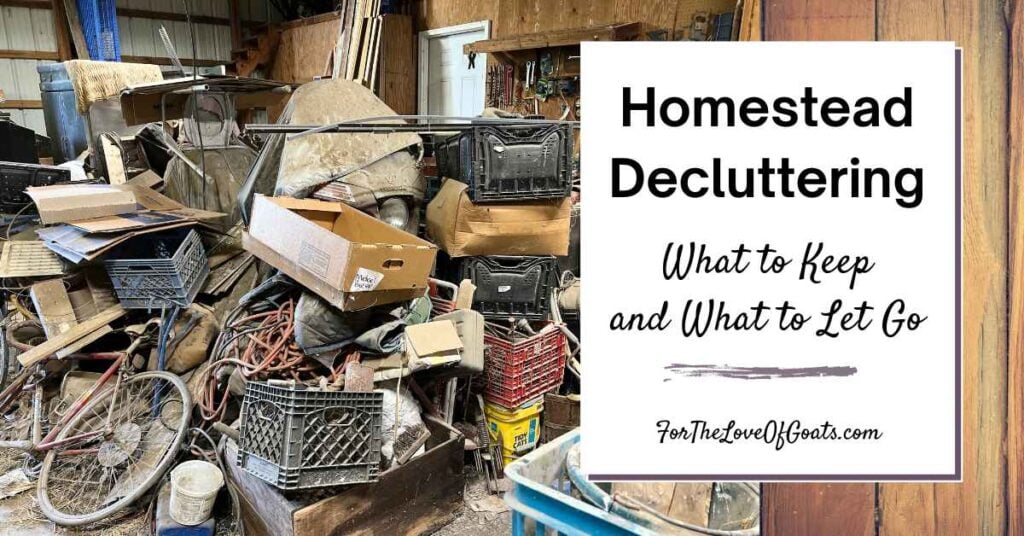
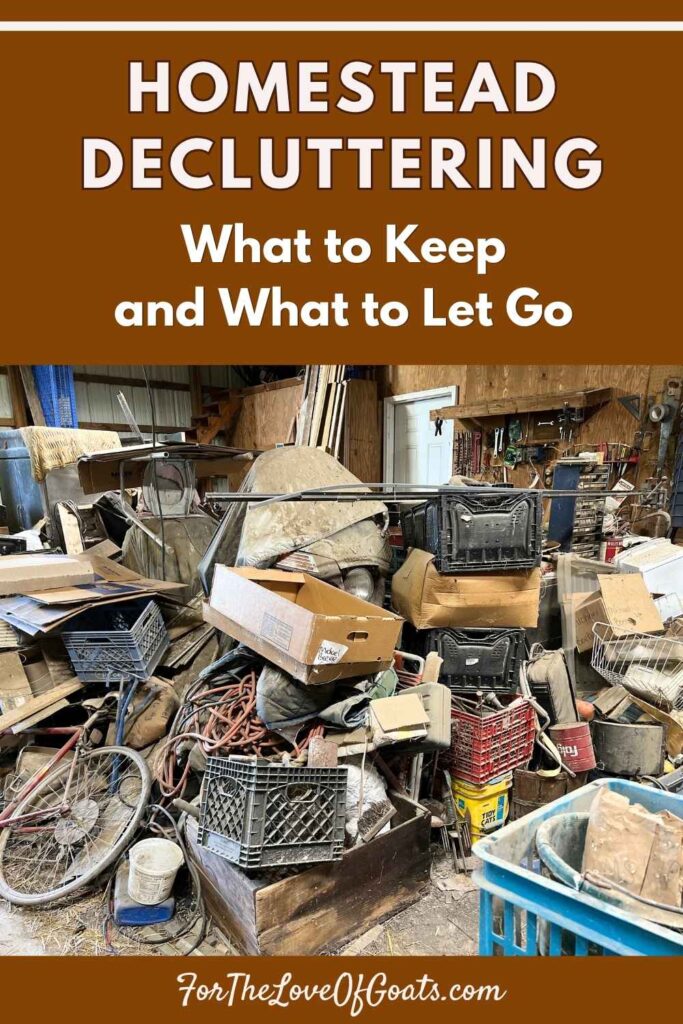
Clutter can build up quickly on a homestead. Tools, livestock supplies, equipment, canning jars, soap-making ingredients, and all those things we might need “someday” can slowly take over barns, workspaces, and even our homes. But when does being prepared cross the line into simply having too much stuff?
In today’s episode, Deborah Niemann talks with Melanie Cohen, founder of Thoughtfully Coaching and host of the Lighten Up: The Art of Living Clutter-Free podcast, along with several Goats 365 members. They discuss why decluttering should come before organizing, how to deal with “just in case” clutter, and how emotional attachment, cost, and fear of needing something later can make it difficult to let things go.
They also talk about the difference between clutter and preparedness, how clutter can affect productivity and stress, and why maintaining a decluttered space requires ongoing effort.
Melanie shares practical ideas such as looking at what you have actually used in the past, borrowing rarely used equipment, setting aside short periods of time to declutter, and asking whether an item still serves you in your current season of life. The goal isn’t minimalism—it’s creating enough space to do the things you truly want and need to do.
Featured Guest
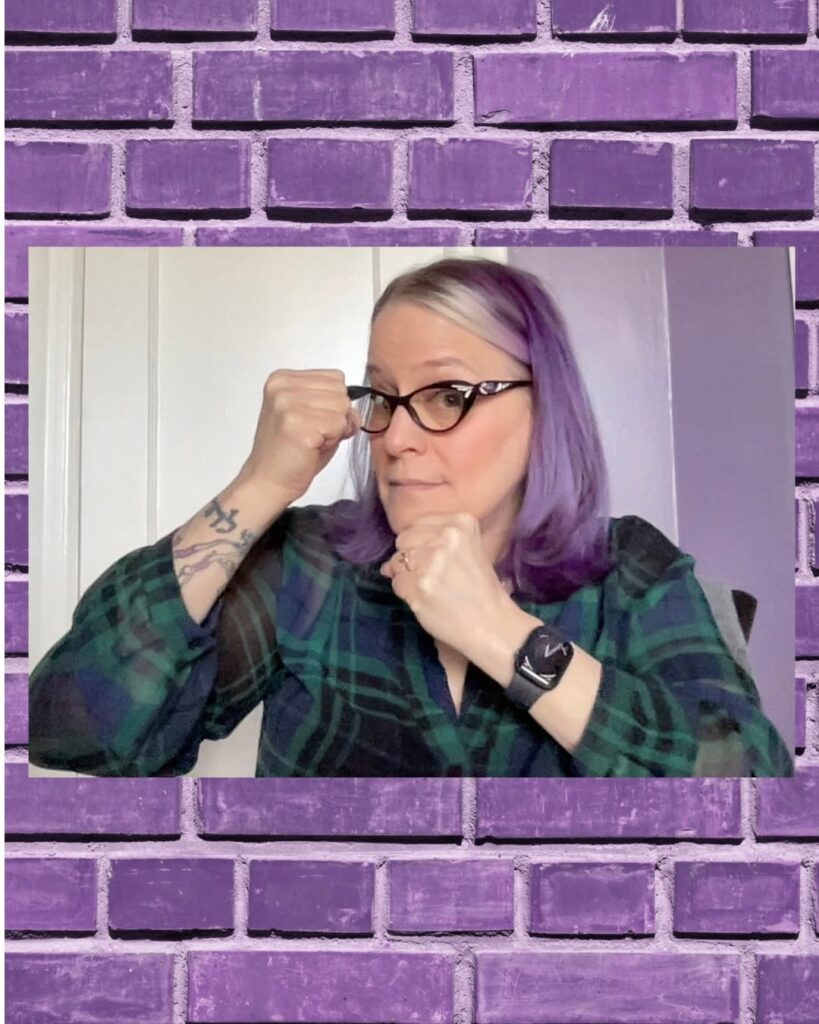
Melanie Cohen is the founder of Thoughtfully Coaching and host of the Lighten Up: The Art of Living Clutter-Free podcast. She helps people understand how clutter can affect productivity, stress, daily routines, and overall well-being, while creating practical habits for letting go of what no longer serves them.
Connect with Melanie on social media: Facebook | Instagram | YouTube | TikTok | LinkedIn
Listen right here…
Don’t miss future episodes of For the Love of Goats!
Subscribe on Apple Podcasts, Spotify, iHeart, or your favorite podcast app.
Watch the video version
Transcript
Intro 00:03
For the love of goats! We are talking about everything goat. Whether you’re a goat owner, a breeder, or just a fan of these wonderful creatures, we’ve got you covered. And now, here’s Deborah Niemann.
Deborah Niemann 00:18
Hello, everyone, and welcome to today’s episode. This one is really special because I am joined not only by a guest but also by several members of Goats 365 and also my husband Mike, and I’m so excited that they all agreed to join us today because we are talking about farmstead clutter.
Deborah Niemann 00:38
A few weeks ago, one of our Goats 365 members posted some pictures from his barn and said, “Hey everybody, show me your pictures of piles of stuff I might need someday.” And everyone complied by posting pictures of all sorts of things from their barns and other messy parts of their farm. And I immediately thought of Melanie Cohen, who is the founder of Thoughtfully Coaching and the host of Lighten Up: The Art of Living Clutter-Free podcast, because I was actually on her podcast a few months ago talking about homestead clutter.
Deborah Niemann 00:43
And I thought, wow, this would be great if she came along to my podcast and talked to my members, because it seemed that there was usually this dichotomy in the relationships. Like somebody would post about their clutter and say that it was driving their spouse crazy, or the spouse would post a picture of clutter and say, “This isn’t mine. This is my spouse’s clutter, and it drives me crazy.” So I thought this is perfect. So welcome to the show, Melanie.
Melanie Cohen 01:43
Thank you for having me, Deborah. I’m excited.
Deborah Niemann 01:45
And welcome to all the Goat 365 members that were brave enough to hop on this call with us, and also to my husband. So first of all, before we get too far into this discussion, let’s just define clutter. What exactly is it? Is it just having too much stuff? Is it disorganized stuff? What is it?
Melanie Cohen 02:01
It’s a really good question, and I feel like you know, under normal circumstances, we would consult Merriam-Webster or one of the dictionaries. But I think clutter has come to mean so much more than just you know the physical. And when I’m working with clients, we talk about all the different forms of clutter. Whether we’re talking about email, photographs on the computer, or on your phone, we talk about calendar commitments, often commitments that are for other people, not for ourselves can be clutter. And so for me, I define clutter as anything that gets in the way of you being able to do the things that you want and need to do, or just holds you back, because for some people, whether it’s a small level of clutter or higher, find themselves paralyzed by being able to get anything done when there’s clutter all around them.
Deborah Niemann 02:54
Okay, and then what’s the biggest misconception that people have about decluttering?
Melanie Cohen 02:59
That you start with organizing. You know, I got to organize my stuff. But if there’s too much stuff, you’re going to organize the same thing over and over and over again. And so, I think it’s really important to let go of as much as possible before trying to get organized.
Deborah Niemann 03:17
So, one of the things that was front and center in that discussion we had in our private community was “stuff I might need someday.” That’s a big, probably the biggest thing with homesteaders is that we think we might need this thing someday. So how do you deal with that?
Melanie Cohen 03:36
So I, not being a homesteader, for those of you who don’t know, I’m in New York City. So when Deborah and I talk, we’re like coming from such different perspectives in terms of like where my clutter is, but we have the “just in case” clutter also. Whether it’s you know the junk drawer filled with whatever the junk is, I think of things like the twisty ties from bread that you purchase or the little plastic clip ones. You can’t let that stuff go for a host of reasons.
Melanie Cohen 04:04
One, because my mother keeps asking me about them, and then you hear things like the little plastic one you can use for keeping your cords separated or straight or easy to find. It’s very easy for us to lean very heavily into, but just in case, which I think is much deeper than I might need it. But I don’t want it to go to waste. I don’t want to see it go into a landfill or garbage. And for many of us, we were either raised by parents or grandparents who were of the Depression era, and you don’t let anything go because you don’t know if you’re ever going to have it again. And so I think just in case is like at the top of my list of why we have a hard time letting things go.
Deborah Niemann 04:50
Okay.
Melanie Cohen 04:51
Deborah, can I touch on something because you mentioned it as we were getting started? And it’s that idea that you know it’s my spouse’s clutter, and so since there are men here, bear with me. The research shows that women’s stress cortisol levels rise significantly when there’s clutter around them in ways that don’t happen for men. And it doesn’t mean that all men are slobs. Obviously, that’s not what I mean. But what it does mean is that there are chances that there’s some kind of middle road that we have to meet if they’re not stressed by the clutter. If this clutter is not getting in their way, them understanding clutter is a little overwhelming to me. My husband doesn’t see the thing that he steps over 19 times a day. That thing on the floor, I know it’s there. He can step over it and not notice it. I’m not making fun of them. I’m just saying that, like, the way we see things are different.
Deborah Niemann 05:46
That is really interesting because that is definitely the case in our relationship. I think there were a couple women where you know it was flipped. They said they’re the ones who are more likely to keep things, and their husbands are more interested in keeping things neat and organized. So, of course, there are exceptions, but it’s really interesting to see that there’s a physiological reaction that some of us females have to clutter.
Melanie Cohen 06:11
And just because we have clutter doesn’t mean that we don’t experience that. You know, there is a hoarder in my family, high level hoarder, and it’s not that she wants to live that way. It’s she has a hard time navigating herself out of it. And high-level hoarding, to be fair, is something that is often associated with either high levels of trauma, OCD, autism spectrum disorder, ADHD, menopause, depression, anxiety. And forbid any of us are navigating multiple of those at the same time. It’s very easy to just throw our arms up in the air and say, you know what, forget about it. I can’t deal with it. I’m just going to let it be.
Deborah Niemann 06:51
So, what advice do you have for people whose barns tend to fill up with garbage faster than they can seem to keep it clean?
Melanie Cohen 06:58
I hear two things in that. One is having help, physical help, you know, in terms of how much labor that kind of stuff can be, but also finding that place where we can say, I do have things that I need just in case. Like, how many of those things do I actually need? What is the level that I keep and the things that I let go of, also? Because at the end of the day, if it’s garbage, it’s going to be garbage today, tomorrow, and the next day. And so, for those of us who have a really hard time letting things go, it’s going to have to get let go of at some point. Am I going to be the one making that decision and actively doing it, or am I saving it for someone else to have to take care of later?
Deborah Niemann 07:42
You just said a lot of really important stuff there.
Melanie Cohen 07:46
I can say because one of the conversations that we have with the hoarder in my life is like, how do you want to leave this when you’re gone? Do you want to leave us struggling getting rid of your stuff and cursing you out and thinking all the things, or do we want to take care of as much of that as possible now? That way, when you’re gone, because that’s going to happen. When you’re gone, we can dive immediately into mourning you or honoring you. Like, let me put on your favorite music and eat your favorite food and tell stories back from my childhood. Or you know, do you want us to worry about what’s going to happen to your home when you’re gone?
Deborah Niemann 08:24
I know we have gotten a dumpster a couple of times in front of our barns because I said if we get hit by a bus tomorrow, I don’t want this to be our children’s final memory of us. I don’t want them sitting there going, “Oh wow, yeah, mom and dad, they just had so much garbage. We had to rent multiple dumpsters to just get it all thrown out.
Melanie Cohen 08:45
Right. Yeah.
Deborah Niemann 08:46
And we did actually invite our children to come help us. I said maybe there’s something in there that you want. I don’t know because where it got to the point that we rented it the first time was we have, one of the barns is 40 feet by 60 feet, and the back 10 feet has some goat kidding pens in it. But the other 50 feet, so 50 feet by 40 feet, that’s 2000 square feet, was filled with clutter. Like there was one small path that you could walk through. One of the daughters, when she came, she said, “Well, if you guys were dead tomorrow, all of this would be going in a dumpster. Like we wouldn’t even be giving it a second thought.”
Melanie Cohen 09:25
Right, right.
Deborah Niemann 09:26
How often should someone reassess supplies that they’re keeping for livestock or for those just in case things?
Melanie Cohen 09:34
Are you asking me that question or someone else in the room? I ask it because this is-it’s alien to me, you know. Again, you know, grew up in New York City. I will tell you though, my very first job was at the Bronx Zoo. You know, I know animals, I know feeding animals, but I know it in a setting where I am reporting to the head of the education department, which is where I worked. And again, this was my first job. This was forty years ago. And one of the greatest jobs that I ever had. But I think the best way to answer that question is to be able to look backwards. And when I mean backwards, like whether you’re looking at the last six months or the last year or the last decade, you know, what do I normally need on how regular a basis? And that should be, you know like where we start, and it can be scary to let things go. Like I want to be fair. It can be scary to let things go, and honoring those feelings I think are really important.
Deborah Niemann 10:34
Judy just put a question in the chat that I think asks the question better than I did, and that is, what’s the difference between clutter and being prepared?
Melanie Cohen 10:43
That’s a really good question. Like, how many batteries do I need in my drawer to be prepared for you know, I’m in New York, so the worst is going to be a hurricane. I lived in California and lived through an earthquake, which also was like, I don’t need a flashlight. I need all the batteries, you know, just in case. And so we can’t get organized unless we’ve gotten rid of enough stuff. That was one of the first things you know that we talked about is that organizing before we let things go just means we’re going to do the same job over and over again.
Melanie Cohen 11:11
And so I do think it means sitting down and really understanding your homestead, your farm, and having that history, that data, if you will, that’s what it is-is data. How much am I going to need going forward? The question: “What will it cost me to replace it?” I think is a really good question because if it’s not going to cost me a lot to replace it, but it’s getting in the way of my being able to do my job in a way that is efficient or a way that makes me feel good, then I have to be okay with letting things, some things go, and I might actually have to replace it sometime. Although I think often when we let those things go, years go by, and we’re like, “Oh, I really didn’t need the thing.”
Deborah Niemann 11:54
Yeah, exactly. And the problem when you have too much is that even if you do keep the expensive thing, what I find a lot of times is that you know my husband says, “Oh, I have that, and then he can’t find it.”
Melanie Cohen 12:06
Yes, more common than not. If there’s so much stuff, how am I going to be able to find the thing easily or urgently? Because sometimes you’re looking for something urgently.
Deborah Niemann 12:15
Exactly. Terry just put in the chat. I use tools my grandfather used. I have lots of other tools with broken handles, etc. that I feel will come into use sometime.
Melanie Cohen 12:25
Right. There’s a, that’s a good just in case. I think honoring the fact that you’re using your grandfather’s tools. I mean, that’s amazing. If you know, for me, that’s akin to wearing a piece of jewelry that had belonged to my grandmother, or I have her silver, and I don’t use silver very often. We’re not fancy people like that. However, when I bring it out, it reminds me of her Thanksgiving table. It reminds me of being with those people. So there’s purpose behind it, but also purpose that feels really good.
Melanie Cohen 12:54
If I had my grandfather’s, my grandfather was a printer. So if I had his print shop or things from his print shop, I would need to know that they’re getting used, and it can be really. I think it’s important to say that we have an emotional attachment to our things, whether that seems logical or not. We have an emotional attachment to them. It’s as if you know, if this marker had belonged to my grandfather, that somehow you know, like he’s in the thing. I think that’s important to say. You know, because we don’t need to beat ourselves up for having hung on to things that we need or we don’t need, especially because there can be an emotional attachment to them.
Deborah Niemann 13:34
Yeah. In addition to emotional attachment, which I think can definitely be one of the hardest kinds of attachment, is something that you paid a lot of money for, and maybe you don’t need it anymore. You know, like I know when our daughters were home, we had a couple horses. Horse equipment is very expensive. It’s hard to let go of something that you know you paid a lot of money for. I don’t know. Is it better to try to sell something like that? I feel like sometimes we get hung up with like, oh, I’ll put it on eBay, and for whatever reason, it never gets on eBay. So, what do you do about those things that cost you a lot of money and you feel like you don’t want to throw money away?
Melanie Cohen 14:11
I sell clothing and stuff like that on Poshmark. Like, I’m very hesitant to let things go. So, the one thing I’ll say about is I have to ask myself the question: How much am I going to get for the thing? Because I’m gonna have to take pictures of the thing. I’m gonna have to upload the pictures of the thing. I’m gonna have to write a description of the thing. If the thing sells, either I have to make arrangements for someone to come pick it up, or it may be something that I have to pack and ship. And once all of those tasks are over, how much money am I getting?
Melanie Cohen 14:38
And I think everyone needs to have their own like threshold number of what that is, but I think it’s really important to ask the question: Is this really going to be worth all of the time and energy that it’s going to take to sell this thing? And I think the other piece of that, again, I’m going to speak a language that I’m not as familiar with. I also get to the point where it’s just time to let things go like you know to give them away.
Melanie Cohen 15:02
Whether we’re using you know we have buy nothing groups on Facebook. I can take a picture of a dress, post it there. Is there someone that wants this? If I were ready to let go of you know china or crystal or something like that, I like knowing that it’s staying in the community. It is community building in and of itself, and so sometimes it feels better giving it away, knowing that someone else is giving it a second life. Or when I take things from someone else that I’m giving what won’t belong to them or their parents or whoever, I’m giving it a second life. Or maybe by the time I get it, it’s on its third or fourth life. I don’t know.
Deborah Niemann 15:36
We have a couple people in the chat who mentioned not having enough room for all of this stuff actually in their house, like because they do things like soap making and canning and a lot of things like that, and I definitely can also appreciate that. And we’ve had that challenge too. And I’m sure you see that with people in the city as well. It’s not unique to homesteading, everybody has hobbies.
Melanie Cohen 16:02
I just was working with someone who I had to ask the question: “How many sewing machines do you need?” She explained to me, you know, but this sewing machine is for this thing, and that sewing machine is for that thing. And one of the things that we talked about was, do we need to own everything, or are there places for me to borrow from somebody else or do sharing? And that comes up, I think, a lot when it comes to we live in an apartment. We would never have a wet vac.
Melanie Cohen 16:32
However, our best friends who live around the corner and do live in a house have a wet vac. I’m happy, you know, to borrow. “How many sewing machines? All of them.” At some point, we have to ask the question: Is having all the extra stuff helping me be more productive, or is it holding me back from productivity? I mean, productivity in a whole host of ways. Like, one, does it make me feel good? Am I producing things that make me feel good, or am I producing at the rate that I could, if I wasn’t constantly putting the thing away, bringing it back out, moving the thing, like you know, the dining room table that’s full of papers and work and stuff. Like, how many times am I moving one pile of paper in order to make space for me to be able to do the thing, whatever that thing is?
Deborah Niemann 17:18
Barbara asked in the chat, “Is there any way to curtail my husband’s hobby of shopping estate sales and auctions? My birthday gift this year was a 20-yard dumpster on site for a month. However, as fast as I get rid of stuff, my husband finds new treasures to fill that space I just cleaned out.
Melanie Cohen 17:34
I think a lot of it has to do with the conversation you’re having. One of the things that we had said in the beginning was that the research shows that women, their stress cortisol levels shoot up around clutter, and men not so much. And I think it’s about the conversation you have. If I let that person know this stresses me out, there are people who say, “I don’t understand why that stresses you out. That shouldn’t stress you out.”
Melanie Cohen 17:57
At that point, it doesn’t matter why it stresses me out, or whether or not you believe it should stress me out. If it does, then we have to find a way to partner together. And I think often when we’re frustrated or stressed by these things, we raise our voices and we make accusations and we point fingers. And I’m not implying that that’s what everyone’s doing, but that’s often what happens, and so if we can find a way to have the conversation in a very calm way, but to be able to communicate. “I know you don’t understand this. I know you don’t understand why it stresses me out, but it does, and I need your support on this.”
Deborah Niemann 18:34
So this is kind of a follow up to that question, and that is, once you have decluttered, how do you keep it from coming back?
Melanie Cohen 18:42
Maintenance. I spent 20 years working in the weight loss industry, and so everything wasn’t just about losing the weight. But once you get there, how do you maintain it? I think clutter is exactly the same, and so it doesn’t mean like we got rid of the clutter. Life’s going to be perfect now. There’s still upkeep with it. Whether that’s you know, in my life, the clutter is most likely to be paper. Even with everything being digitized, we still get a ton of mail. We still paper still cross our desks. There are some things that we have to have the paper for, and I have to tackle it before it becomes a problem.
Melanie Cohen 19:18
In my world, 10 minutes every day is spent resetting everything. Whether it’s the kitchen at the end of the meal, whether it’s the bedroom, whether it’s the laundry that I need to invest sometimes. I don’t always need 10 minutes, but I have the 10-minute rule for the days that I do need those things to happen. It’s reminding yourself of why you’ve done the thing. Once I have decluttered the space, how’s that going to make me feel? Is that going to make me more productive? Is that going to make me happier? Am I going to be less stressed? And when I can get in touch with all of those feelings associated with having let go of the clutter, then there’s more incentive to keep up with the clutter, as opposed to, well, I did it because I was supposed to.
Deborah Niemann 20:04
Is there really any particular way to get started? You know, sometimes you hear people say like, “Oh, get a dumpster, which is what we’ve done twice for the barn, or is it better to just do the thing like 10 minutes a day, 30 minutes, something like that? Like something like I think you know that people who’ve written books on tiny habits and atomic habits or whatever talk about you know doing something that’s just so small you can’t not do it. Is that a better option or how should somebody get started?
Melanie Cohen 20:36
So my answer isn’t always everyone’s favorite answer, and is “It depends.” I think it depends on the person. It depends on the task. In my world, with my clients, I do a once a month live decluttering session, and we meet online. We talk a little bit about clutter and what we’re working on that day, and then I set a timer for 30 minutes. And people usually are like, “Pshaw, what can you get done in 30 minutes?” You can get a lot done in 30 minutes, and when you see that, it helps build momentum. So I find that is helpful. I also do 30-day challenges where I get people to commit to 10 minutes a day, and so I don’t think that one is better than the other. I think it’s always about building momentum. And that said, there may be spaces where the nuclear option is the only option, you know, and bring in the dumpster and let things go. So I hesitate to say that one is better than the other, as opposed to it’s going to depend on the situation and the people involved.
Deborah Niemann 21:34
Terry was saying that he’s into a little bit of everything because he’s just a curious person and wants to try everything. Should he dedicate one room of his house to all those different interests?
Melanie Cohen 21:45
Could or maybe you could. I think it depends on you know the size of the room and how many things are necessary. I think it’s really easy when you’re like the dining room is for eating and the kitchen is for preparing and eating and the bedroom is for sleeping and there may be other rooms that are catch-all rooms. I don’t recommend a lot of those things happening in the bedroom, though. One of the things that I do in helping people letting go of clutter is for those of us who struggle with sleep, which can be you know anybody. If the last thing you see before you go to bed is clutter, that’s what’s in your head. Like you’re taking that to bed, and it can make it that much harder to sleep. So often, that’s one of the places I recommend starting with. If for no other reason, the amount of health benefits there are to keeping that space as clutter-free as possible.
Deborah Niemann 22:35
That makes total sense. I really love that suggestion.
Melanie Cohen 22:40
I feel like she’s talking to someone else here, not me. If I could say something else about that, because when I came to the world of clutter, it came from being an expert coach in health and wellness. And when it comes to the clutter, it affects all aspects of health and wellness. One of the things that I talk about with clients is, you know, a messy kitchen is probably a kitchen where we’re not doing a lot of healthy food prep. You know, I said about the bedroom if we want to exercise, but the exercise equipment is all you know covered in dry cleaning or or laundry that hasn’t been put away. We’re not getting on the exercise bike or the treadmill or whatever that is.
Melanie Cohen 23:18
And for me, I love to do yoga in my living room. But if the living room is messy, I’m not even opening the yoga mat. And so I think that when we really understand the impact that clutter can have on our health, often it is a great motivator to step in and start doing some more. I think I saw something in the chat about ADHD, and I would love to talk about that a little if I can.
Deborah Niemann 23:40
Absolutely, thank you.
Melanie Cohen 23:42
So I was diagnosed with ADHD at 30, which all of a sudden explained everything about struggles in school and struggles with behavior, and it was really helpful so that I wasn’t beating myself up anymore. But what I know is, with an ADHD brain, like going from task to task to task. I mean, we’ve been taught that multitasking is honorable, but the reality is, is that multitasking is really better to call it task switching. So if I’m switching from one task to another, all of a sudden it’s like needing to get started all over again. And when you go back to that task that you’ve been doing, it takes minutes to reengage with what that is, and so removing the clutter makes it so much better. I’m not talking effectively. This is also what happens in menopause, and so when you take ADHD and menopause, all bets are off. But what I mean to say is that in order to feel like we can stay on top of things, someone with ADHD needs that clutter-free even more.
Deborah Niemann 24:48
Does anybody want to share one area of your homestead that’s really driving you crazy right now that you have a question about?
Judy- Goats 365 member 24:56
Hi, Melanie. It’s nice to meet you. I think I’m one of those ladies who has ADHD symptoms that have onset with menopause, maybe because I’ve always been hyper-focused and able to keep on task, and then boom, I run around in circles all day. Like literally, I can make circles all around my house, and every room has a thing, and I’ll see the thing, and I’ll pick up the thing, and do the thing, and then go somewhere else for unknown reasons. And it is not conducive to organization. And I’ve always been super duper left-brained, extremely organized, a place for everything, and everything in its place.
Judy Goats 365 member 25:36
And then I walk into a room, and I’m like, “What happened in here? Who was here?” And it was me. It was all me. Also, I like to try a lot of different things, and so fortunately, I have a big house. And I have a husband who is extremely indulgent, and so I have a room that’s a big room that, like you know, okay. So I have always knitted and crocheted, so I have bins of extra yarn and stuff, and then I needed to learn how to spin because knitting wasn’t weird enough.
Judy – Goats 365 member 26:07
So then I had to try different styles of spinning wheels, and then I’ve got big Rubbermaid totes of actual full fleeces that are probably like eight years old at this point. And I have decluttered. I have gotten stuff gone and given it away and everything else. Well, then after I started spinning, I had to weave, and once you weave, you’ve got to sew stuff with that cloth. And so I don’t know how many sewing machines I have because I’m not going to count them. And then I decided I needed dairy goats because I’ve never done that before, and so now I make soap and I make cheese, and I have all these big giant pots. And if you have a big giant pot, you might as well can stuff from the garden. And I mean, it just goes on and on. So I have this. I mean, it’s really a huge room. It’s a really large room, and it is full. And I’m a stacker. Like who said the comment about the stacks of things, and you know where everything is, okay? But still, stacks sometimes fall down, and sometimes people walk by, and things get mixed up. And where do you even start?
Melanie Cohen 27:14
Can I talk about stacks first, and then we’ll tackle some of the other ones? Because I have people tell me all the time, and I was one of them. Don’t touch my papers. I know exactly where everything is, right? Like we’ve been there. But then I had to start asking myself the question: even if I know where everything is, is it taking me longer to get the thing because it’s in a pile as opposed to you know some other form of organization? And that was a game changer for me because I realized that even though I knew that it was in that pile and it was on the bottom third of that pile and it was on a pink piece of paper, so it shouldn’t be that hard to find, it still was taking me longer than it needed to, and I think that this is true for a lot of people.
Melanie Cohen 27:57
Yes, we know where everything is, but are we at our most productive because it doesn’t have its home? As opposed to the home, and that could be the pile of mail on the kitchen counter or wherever the catch-all space is, or it could be papers on your desk, or it could be things like the things that you’re talking about. And I think it pays to start with the thing that you love the most. Like this is the thing I am definitely not getting rid of. I am not letting it go, and I try to say things like “lovingly letting go” of the thing, as opposed to like ditching, throwing away, or whatever, because we do have an emotional attachment to pots.
Melanie Cohen 28:33
You know, I have my favorite pot, and it just stays on the stove. But again, I live in a New York City apartment, and you guys don’t even want to know how small my kitchen is, but I do love pots, so I have to make the kitchen the most efficient possible. And you’ll all think this is crazy, but there are people in New York who use their stove or their ovens for storing things. Like I know women who have stored their shoes in the oven because they’re ordering in or going out to eat, but they need space for the shoes, so it has to be what works best for you and where you start.
Melanie Cohen 29:07
One of two things: like commit to the thing that you will never get rid of for whatever reason that is. And then commit to the thing, you know what? I probably can let that go, whether I’m lovingly letting it go or throwing it away because that’s a thing too. I think there’s value in admitting that there are things that you should keep, and Deborah knows this because we’ve talked before. I am not a minimalist. I have no interest in being a minimalist. I love things. The colors and patterns and textures. I have art all over our walls because I enjoy it and appreciate it. If it didn’t bring me joy and was getting in my way, that’s when I would have to let things go, but I don’t want anybody to think we’re asking. I don’t even know how you would have a minimalist homestead based on the conversations that Deborah and I have had. It doesn’t, you know, bring any kind of truth to me. But to be okay with keeping things full, so.
Deborah Niemann 29:55
Being a homesteader is tough in terms of not doing all the things. Like I know when we first moved out there, I wanted to do all the things because it sounded so interesting. And I think sometimes you just have to go through it, and then you figure out the things you love and the things you don’t. We had all the animals in the beginning because I thought, oh, we need cows and goats and sheep and pigs and chickens and turkeys and ducks and geese. Even though I had never eaten lamb in my life before we moved out there, I thought we needed sheep to have lamb meat, you know.
Deborah Niemann 30:31
And then we tried all the things, and some of the things I loved, like the goats, and the goats are still there. Some of the things, you know, it’s like I loved the pork, but we didn’t love the pigs so much, so the pigs had to go. Learning to spin was super cool. I think sometimes we’re more in love with the idea of doing something rather than actually doing it. Like I am really still in love with the idea of spinning, but when my youngest daughter asked if she could take the spinning wheel, I knew I had to say yes because I hadn’t used it even once after she left. So it was just a lovely conversation starter in our house. Like, oh, you have a spinning wheel? Why, yes, I do. You know how to spin? Yes, and like, yeah, I haven’t spun in years, but it was a really cool thing to learn.
Melanie Cohen 31:23
I think that’s important because you know I have like 50 different questions I like to ask myself when it comes to whether I’m going to keep something or let something go. And one of the best ones is there’s someone out there that needs this more than I do, or would appreciate it more than I do. Whether we’re talking about a tool, a hobby, a shirt. That if there potentially is someone that’s going to get more use out of it, than I will, then it’s time to pass that on to that person who will get use out of it.
Deborah Niemann 31:51
So I think Marjorie has a good question. She says her soap making studio, her big challenge, and that she has a hard time getting started, even making soap, much less decluttering or organizing that room. How do you do – like you love doing this thing, but you can’t do it because things are not organized well enough, or there’s just too much. It’s too cluttered that you even have trouble getting started doing the thing you love.
Melanie Cohen 32:16
And it may mean going to the thing that you don’t love first, or maybe you don’t love as much as the other thing. If I really loved soap making, but there was something in the way of my doing the soap making, then I would have to ask the question: “Is this something that I need, want? Is there someone else that could use this thing?” It’s like it’s okay to throw things away, and I know it sounds crazy, but garbage today is garbage tomorrow is garbage next week. And maybe garbage isn’t, you know, a fair word to use because it sounds dirty and things that we definitely need to get rid of.
Melanie Cohen 32:50
But if there is something that’s no longer serving me, maybe it’s better to say like, not in this season of my life. You know, in one season of my life, I was a soap maker, or a weaver, or a sewer, or a knitter, or whatever. If it’s something that I’m not doing right now, then maybe there’s someone that is in that season of life, and allow me to really appreciate the things that I have that bring me joy. If soap making brings me joy, then I have to do it. But it may mean getting rid of other things that aren’t as important.
Deborah Niemann 33:20
Yeah, and definitely when it comes to soap making, you can go overboard with some of the ingredients. Like I know I did in the beginning because I was like, “Oh my gosh, you can get apricot kernel oil. That sounds so cool. I want to try that and see what it does for my soap.” And I went way overboard and bought way too many oils, not realizing that they were gonna go rancid if they didn’t get used fairly quickly. I mean, some of them go rancid within a year. So yeah, and so that really felt very strange and wasteful. And you know, like I threw away probably seven or eight gallons of different oils, and I just kind of had to like keep sniffing it and going, oh yeah, oh god, that’s awful! That smell that burns my nose. It’s rancid. I can’t use that. Okay, it’s going in the garbage. I’m never gonna overbuy again. You know that if I want to try a new oil, I’m gonna buy like four ounces of it or whatever I need for that recipe. I’m not gonna buy a whole gallon.
Melanie Cohen 34:19
I got started in the clutter world on a project with a friend who owns a personal organizing business, and she gave me the kitchen because she said the kitchen was going to be easy for me because I liked the kitchen. And then she, one of the members of her team, brought me cartons of spices. The woman whose home we were fixing loved to cook. She had very exquisite appliances and things, but she had five of every spice. And it was clear that she had so much stuff that she would find a recipe. “Oh my goodness! I have to make this recipe that has marjoram in it.” But couldn’t find the jar of marjoram, so she bought a new one, and then did that three and four times. Everything she had, she had five jars of, and that was really when I sat down and said, “There has to be a place where too much gets in the way of you being able to do the thing that you really want to do.”
Melanie Cohen 35:11
And she had an incredibly cluttered kitchen, and it wasn’t just spices and herbs that needed to go. There were multiple things that she had more than one appliance of, that she probably didn’t need. I believe in multiple appliances. I have an Insta-Pot and I have a crock pot because sometimes something needs to be an Insta-Pot while something is in the crock pot and something else is in the oven and something’s on the stove. But the question is, am I hanging on to it just in case? We’ve gone back to “just in case.”
Deborah Niemann 35:38
Yeah, exactly. Marjorie just said she found a jar of curry that her mother bought, and her mother died in 1989. We recently…
Melanie Cohen 35:45
Did it smell like curry anymore?
Deborah Niemann 35:48
Yeah.
Deborah Niemann 35:48
This has been a fabulous conversation, and I bet we could continue talking here for at least another hour. But like, what is the big takeaway that everybody needs to take away today?
Melanie Cohen 35:59
There are a lot. I would love to go back to the fact that we have an emotional attachment to our things, whether it’s a favorite sweater or a tool that belonged to our grandfather, the silver that belonged to my grandmother. There are lots of reasons why there may be an emotional attachment. It could be because it belonged to somebody else. It could be who gifted it to you. It could be because it costs a lot of money. There are lots of different reasons, so I think it’s really important for us to not be hard on ourselves because we’re hanging on to things.
Melanie Cohen 36:30
Like, don’t beat yourself up over it because there are a lot of really great reasons why you’re hanging on to the thing. And when you’re trying to figure out what that thing is, if you really can’t put your finger on why you’re hanging on to it, that’s a really great thing to let go. And to ask the question, what’s the worst that could happen? I might need to replace it. What’s the worst that can happen can help us then shift into, but what’s the best thing that can happen? I let go of the clutter. What are the things that I will be able to do? What will it afford me in terms of time or space or just you know like good feelings.
Deborah Niemann 37:05
Exactly. Well, thank you so much for joining us today and we might be having you back sometime.
Melanie Cohen 37:11
I’d be happy to. What I’d really love to do is come and visit, but you know we’ll figure that out.
Deborah Niemann 37:18
Oh yeah, I would love to have you come visit too. That would make a good video.
Melanie Cohen 37:22
Is the video gonna be me in shock or throwing my arms up here? I don’t even know where to begin, and that’s okay.
Deborah Niemann 37:29
Yeah, thank you so much for joining us today.
Melanie Cohen 37:33
Thank you for having me, Deborah. Thank you.
Deborah Niemann 37:35
And that’s it for today’s show. If you haven’t already done so, be sure to hit the subscribe button so that you don’t miss any episodes. To see show notes, you can always visit fortheloveofgoats.com, and you can follow us on facebook at facebook.com/lovegoatspodcast. See you again next time. Bye for now.
Pin for later!